


Real Estate Development Minor
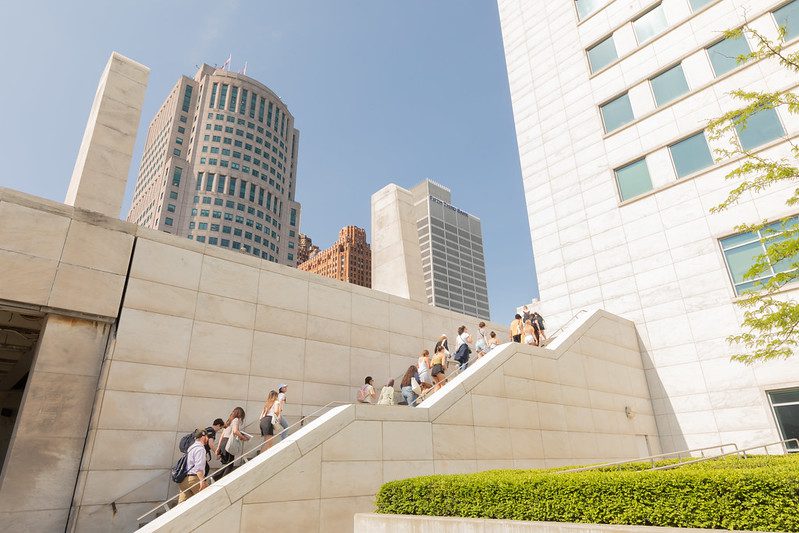
A minor in real estate development empowers undergraduate students in many fields to supplement their major areas of study with broad knowledge about improving metropolitan developments.
With faculty expertise from Taubman College of Architecture and Urban Planning, the Ross School of Business, and the School of Kinesiology, this program offers a progressive approach to developing real estate and the built environment in the U.S. and worldwide.
This 15-credit minor guides students in integrating disciplines to shape sustainable places that:
- Enhance quality of life for all people
- Conserve the natural environment
- Minimize the ecological footprint of the built environment
- Offer alternatives to auto-oriented development
- Reduce environmental impact
- Encourage housing and choice for people of all incomes
- Provide many uses within walking distance
- Create long-term wealth to motivate investment
For more ways to engage in Real Estate extracurricular opportunities, hands-on industry experience, and more, visit the Weiser Center for Real Estate to learn more.
Eligibility and Declaration
The Real Estate Development Minor is currently open to undergraduate students with sophomore standing who have completed at least one semester at U-M, have successfully passed a prerequisite course, and have a declared major in one of the following academic units:
- Taubman College of Architecture and Urban Planning
- Ross School of Business
- School of Kinesiology
- College of Literature, Science, and the Arts (LSA)
- Ford School of Public Policy
- School of Public Health
- Stamps School of Art & Design
- School of Music, Theatre & Dance (SMTD)
- College of Engineering
- School of Information (UMSI)
- School of Nursing (UMSN)
Prerequisites
Students must complete one course in economics at the University of Michigan or obtain a waiver from their home unit due to previous courses or mastery of the subject.
| Course # | Title | Credits |
|---|---|---|
| ECON 101 | Principles of Economics I | 4 |
| ECON 102 | Principles of Economics II | 4 |
| ECON 251 | Introduction to Statistics and Economics II | 4 |
| ECON 401 | Intermediate Microeconomic Theory | 4 |
How to Declare
Fill out the following form to request to declare the Real Estate Development minor.
Additional information for declared minor students is available on the Taubman College Intranet Real Estate Development Minor article.
Required Courses
The 15-credit real estate development minor contains two foundational courses and 9 credits of electives.
Foundational Courses
Students must complete 6 credits of foundational courses, specifically:
- URP 390: Real Estate Design and Development Fundamentals
- And a financial management course:
- FIN 300: Financial Management (BBA majors only), OR
- FIN 302: Making Financial Decisions (non-Ross students only)
Tracks
In addition to the required Foundational Courses, students will select their remaining 9 credits from a list of courses across three suggested tracks: with the choice to either concentrate in one area or spread their learning across all three. A sample list of courses that count toward each track is included below.
Track 1: Finance and Investing
| Course Number | Course Name | Credits | Term |
|---|---|---|---|
| BL 417 | Real Estate Law | 3 | Winter |
| ECON 487 | Urban Economics | 3 | Fall, WInter |
| ES | Finance for Societal Good | 3 | Winter |
| FIN 339 | Managing Maize and Blue REIT Fund | 3 | Winter |
| FIN 463 | Real Estate Development in Practice | 3 | Fall |
| FIN 466 | Real Estate Finance and Investments | 3 | Winter |
| SM 341 | Sports Finance | 3 | Winter |
| SM 440 | Sport, Economic Development, and Urban Revitalization | 3 | Fall, Winter |
| URP 497 | Acquiring and Repositioning Real Estate | 3 | Winter |
| URP 499 | Is a Career in Real Estate Right for Me? | 2 | Fall |
| URP 591 | Financing Real Estate Development | 3 | Fall |
| URP 595 | Public Private Partnerships | 3 | Fall |
Track 2: Sustainability and Affordability
| Course Number | Course Name | Credits | Term |
|---|---|---|---|
| ARCH 357 | Architecture, Sustainability, and the City | 3 | Winter |
| CEE 307 | Sustainable Cities | 3 | Fall |
| ENVIRON 408 | Land Use Policy, Law, and the Environment | 3 | Fall |
| FIN 470 | Real Estate Financial Modeling | 1.5 | Winter |
| RCSTP 357 | Built Environment: Intro to Landscape Change | 3 | Winter |
| URP 423 | Architecture, Sustainability, and the City | 3 | Fall, Winter |
| URP 439 | Sustainable Design and Construction in Real Estate | 3 | Fall |
| URP 482 | Housing Systems | 3 | Winter |
| URP 498 | Affordable Housing Development in Practice | 3 | Winter |
Track 3: Development
| Course Number | Course Name | Credits | Term |
|---|---|---|---|
| BL 417 | Real Estate Law | 3 | Winter |
| CEE 331 | Construction Contracting | 4 | Winter |
| CEE 402 | Professional Issues and Design | 4 | Winter |
| CEE 435 | Building Information Modeling | 3 | Fall |
| FIN 419 | Real Estate Management | 1.5 | Winter |
| SM 440 | Sport, Economic Development, and Urban Revitalization | 3 | Fall, Winter |
| SM 442 | Sports Real Estate Development | 3 | Fall, Winter |
| URP 423 | Architecture, Sustainability, and the City | 3 | Fall, Winter |
| URP 596 | Fundamentals of Real Estate Development | 3 | Fall |
Please note that course listings and availability are subject to change. Please consult the Taubman College Intranet for a comprehensive list and talk with Taubman College Advising if you have any questions while enrolling.
Program Policies
When enrolled in a Taubman College-administered minor, students must abide by their home academic unitʼs policies regarding shared courses within distribution requirements and the minor, as well as those between major and minor or between multiple minors.
Courses graded pass/fail may not be used toward the Real Estate Development minor. Test credits may not be used to meet the requirements of the minor, but they may be used to fulfill prerequisites. Only one elective may be below the 300-level.
Additional information for declared minor students is available on the Taubman College Intranet.
What’s next if you want to engage further with real estate?
Beyond the classroom, you’ll have the chance to participate in co-curricular opportunities like the Michigan Real Estate Club, the annual RE:Con conference, public programs, and industry internships—building the skills, knowledge, and network to thrive in real estate and development. Visit the Weiser Center for Real Estate to learn more.
 Link copied