


Aakash Narayan
Degree Programs: B.S. Urban Tech ’24
Current Employer: Landmark Properties Inc.
Job title: Real Estate Development Analyst
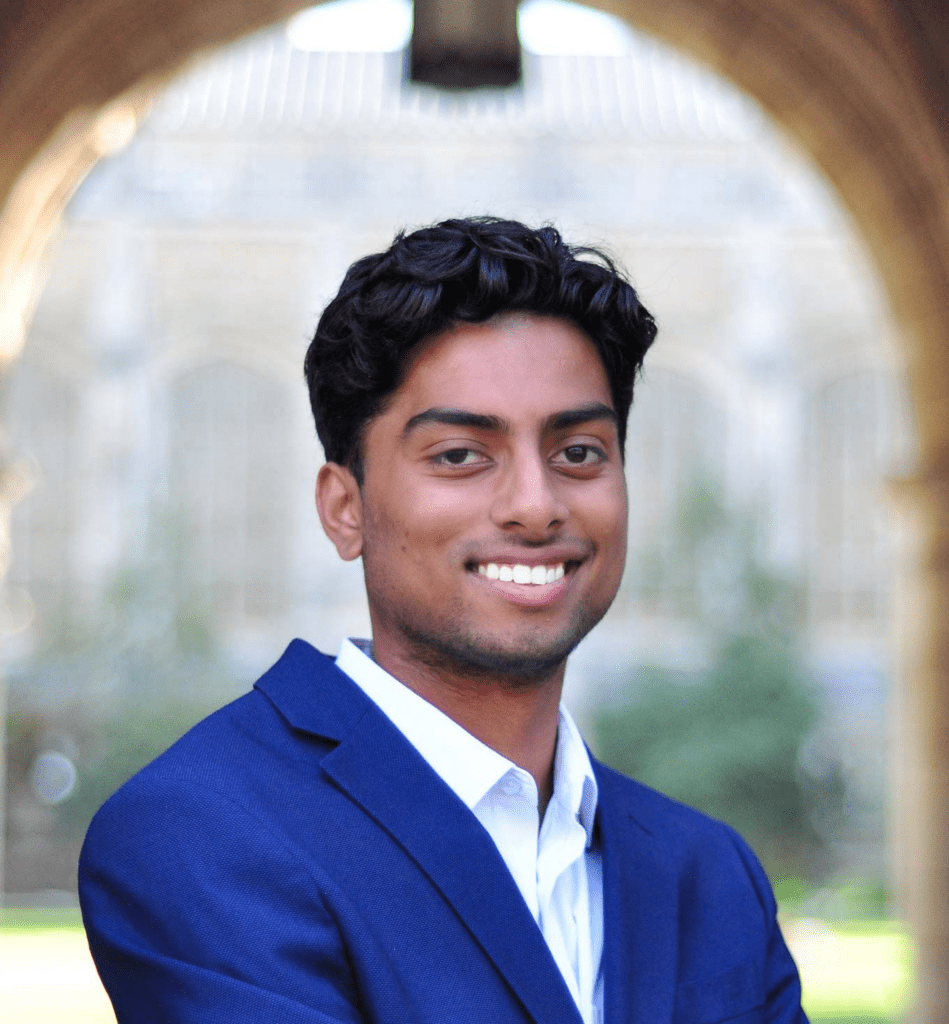
Bachelor of Science in Urban Technology
Describe the work you do. What are some of your recent and current projects that excite you? What inspires you about the future of your chosen field?
I work on the real estate development process including site sourcing, financial underwriting, entitlements, and capitalizing transactions. Recent project was a $173M deal in Eugene which I helped close in June. The continuous evolution of desirable asset classes and investment opportunities is inspiring.
Why did you choose Taubman College for your education?
The Urban Technology degree was unique and I felt it gave me the most optionality within what I wanted to pursue in the future.
How did Taubman College prepare you for your career? What experiences beyond the classroom (internships, research assistantships, teaching opportunities, or other external experiences) provided additional value?
Taubman gave me the confidence, soft skills, and problem solving tools to help me throughout my career. I had three internships and participated in the Weiser Center which further helped me.
How has being part of the alumni community impacted you, personally and professionally?
My bosses have been Michigan alumni, helping me develop relationships with them.
What did you like best about attending Taubman College?
The people I was surrounded with and the ownership of my education.
What advice or important lesson would you share with someone considering Taubman College?
You get what you put into it.
What’s Next for Urban Tech
Posted on 2/6/2026
As a development analyst for Landmark Properties, Aakash Narayan, B.S. Urban Tech ’24, spends a lot of time thinking about one question: “Why would someone want to live here?”
Landmark is an Atlanta-based real estate firm specializing in student housing communities around the United States, the UK, and Ireland. Narayan was hired there following graduation, after completing an internship in 2024.
Working with a team, he helps analyze sites by calculating risks and predicting financial performance. It’s fast-paced work that requires quick thinking, teamwork, and iterating in real time to keep projects moving forward on deadline. The qualitative data analysis falls in line with his urban planning coursework when it comes to zoning codes. But ultimately, he needs to determine what will make an urban area attractive to tenants. “That human-centered approach of putting yourself in someone else’s shoes and using that thought process to carry out all the other functions,” was learned in the Urban Technology program.
“I’m creating a lot of the assumptions for the financial model,” Narayan says. “Does it make sense to add retail here? How much is the retail rent? What kinds of tenants would we get? A lot of it boils down to analyzing a place and why someone would want to live there, and then a lot of the financial metrics are taken from answering that singular question.”
While at Taubman College, Narayan also co-founded the Urban Technology Student Organization (UTSO), where he learned to get creative with securing funding and organize and plan meetings — skills he still employs today. Although his work is far from what he was doing in his upper studio courses, Narayan says the basic principles are central to how he operates. “That kind of workflow that we had in studios is my workflow here,” he says. “Knowing how to take feedback and adjust, and all of those kinds of intangibles from the Urban Technology course structure, that’s replicated here.”
