


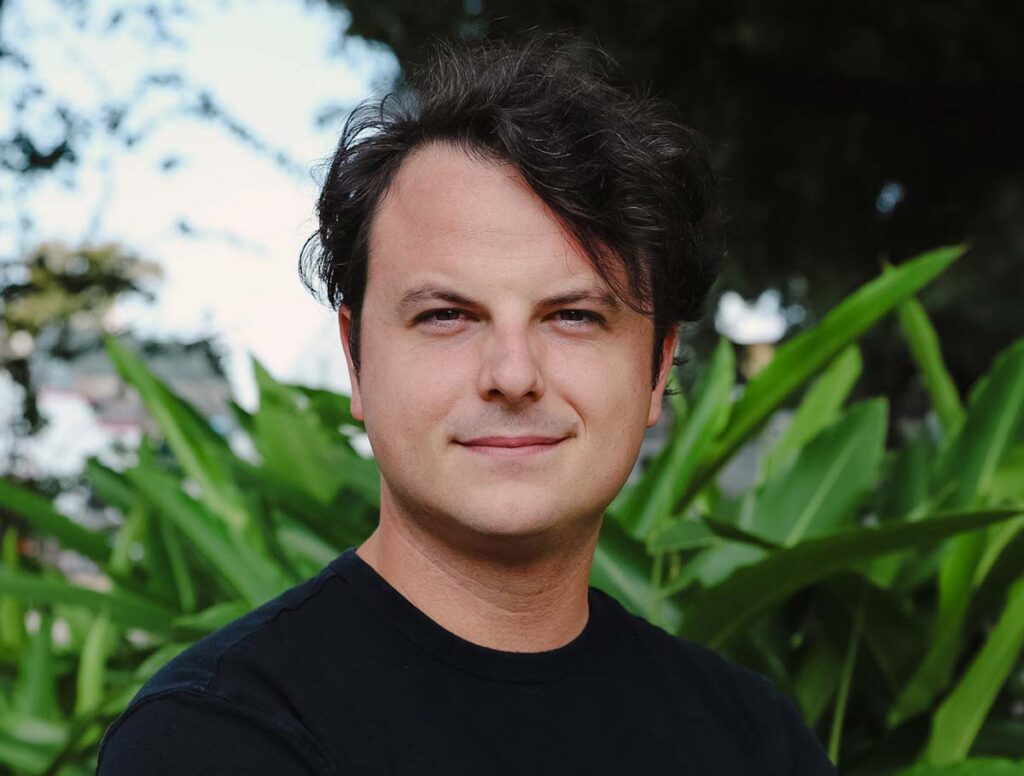
Travis Crabtree
Degree Programs: M.U.D. ’16
Current Employer: TREE Urban Design + Landscape Architecture
Job title: Principal, Urban Designer, Landscape Architect
Master of Urban Design
“There’s enormous opportunity for urban designers to focus in post-industrial places where people have left and continue to leave. The Midwest and the Deep South aren’t behind, they’re laboratories for our profession to help lead reinvestment, transform car-centric communities into walkable ones, and create meaningful experiences and a higher quality of life for the next generation.”
What made you choose Taubman College?
I chose the Master of Urban Design program at Taubman College because of its strong emphasis on design as a tool for addressing the challenges of post-industrial cities. Detroit and other Rust Belt cities offered a uniquely immersive learning environment that aligned closely with my interests and provided lessons I hoped to bring back to cities in the Southern United States. Having lived and worked in Jackson, Mississippi, New Orleans, Louisiana, and Dallas, Texas, I was particularly interested in understanding how design problem-solving strategies emerging in Detroit could inform work in Southern cities facing similar conditions of population loss, disinvestment, and large inventories of underutilized land.
Before beginning graduate school, I was especially drawn to Detroit’s expansive vacant landscapes and the ways they were being reimagined as new forms of landscape infrastructure. I was fascinated by how mobility networks were being reconnected through greenways, how stormwater was being managed through green infrastructure, and how vacant land was being activated for urban agriculture, renewable energy production, and community-based initiatives. The city represented a living laboratory where grassroots organizations, designers, and entrepreneurs were collaboratively reshaping urban form and that environment made Taubman the ideal place to study urban design.
Tell us about your career path/trajectory and any specific projects of interest.
After graduating, I worked as a research associate at RVTR under Geoffrey Thün and Kathy Velikov, where I focused on city data aggregation, mapping, and the development of conceptual design strategies for next-generation mobility systems. My role emphasized systems-based thinking and interdisciplinary collaboration, allowing me to work alongside professionals across transit, public health, education, and food systems.
I later moved south to join the City of Jackson’s Department of Planning and Development, where I led the Long Range Planning Division. In that role, I guided citywide initiatives focused on land use, mobility, public art, and parks and open space systems. Notable efforts included The Fertile Ground Project, a Bloomberg-funded public art initiative addressing food access, and the Oneline Transit-Oriented Development Corridor, a six-mile mobility spine connecting the largest concentration of medical, educational, and employment institutions in Mississippi.
In 2020, I founded TREE Urban Design + Landscape Architecture, an interdisciplinary practice based in Jackson, Mississippi. TREE focuses on designing and implementing transformative public spaces and green infrastructure systems that improve quality of life in post-industrial cities facing depopulation and disinvestment. Much of our work has centered in Jackson, where we have led or supported projects such as the Museum Trail Greenway, the Pearl River Revitalization Project, and a citywide parks and trails strategy aimed at concentrating new development, reconnecting neighborhoods and institutions, and catalyzing reinvestment in Downtown.
What was the most invaluable component of your M.U.D. degree program at Taubman College?
The most invaluable part of my M.U.D. experience was the opportunity to learn directly from Detroit and my professors’ different approaches to design experience and place-based problem solving. The city functioned as a living urban laboratory, where land, infrastructure, mobility, and public space could be studied in real time and where speculative ideas were not only welcomed but necessary. Detroit’s scale of vacancy, reinvention, and experimentation forced us to think critically about what urbanism could become rather than simply respond to what already existed. Its challenges pushed us to imagine new spatial patterns emerging from post-industrial conditions, rethinking how landscape could operate as infrastructure, how mobility systems could evolve, and how public space could anchor reinvestment. That environment shaped my understanding of urban design as both analytical and visionary, grounded in systems thinking yet open to new possibilities for cities in transition.
What advice, if any, would you give a student considering the program at U-M?
I would encourage students considering the program to arrive with one or two research interests they are genuinely eager to explore. Having a point of focus can provide a “north star” direction and help ground your work, even if that interest evolves over time. The program offers a wide range of perspectives on urban design, and entering with both curiosity and intention allows you to fully engage with that.
