Dean Massey: New Master of Urban Technology will equip students to lead through innovative degree design, emerging tech, and human connections
Republished from The University Record article “Look to Leadership: Shaping cities with AI and alumni” (March 9, 2026; by Dean Jonathan Massey)
“I want to empower students to leverage AI so that they can lead with curiosity and empathy in undertaking socially relevant, ecologically minded work.”
“I want to leverage the scaling capacity of technology so that people can lead the lives they want.”
“I want to create a future in which designers have the business and tech chops to make their ideas happen.”
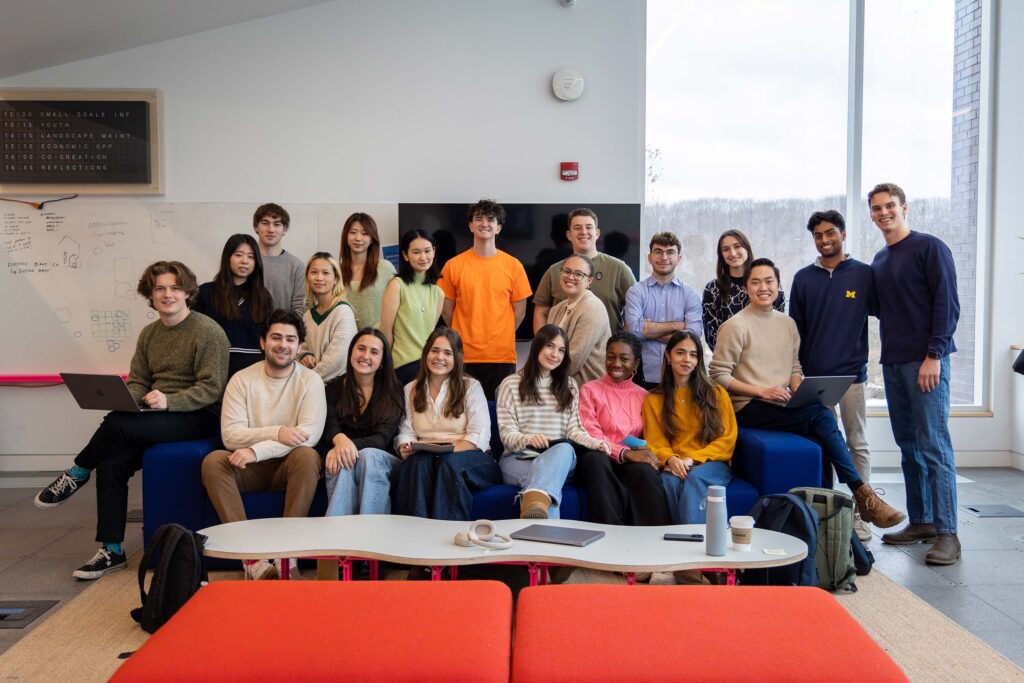
Last September, a group of Taubman College faculty, alumni, and advisors gathered to workshop a new graduate degree addressing emergent needs and methods in our fields.
Building on a year of meetings with faculty and consultation with industry experts, we used design thinking to focus ideas and prioritize competing goals. The fields of architecture, planning, and real estate are changing, and we started by articulating some desires — including the examples above — for ways that Taubman College can transform the educational experience to help people lead those changes.
Our guiding question: How can we equip students to shape the built environment beyond existing roles and degree pathways?
Working through a series of prompts, several whiteboards, and, yes, many sticky notes, we set parameters for a one-year graduate program that equips students with the systems and business models to improve housing, water, mobility, and other urban systems. Unlike competitor programs, it would employ technology to grow student agency, build entrepreneurial sensibility, and create impactful solutions.
The result of all that planning is a new Master of Urban Technology that, pending university and state approval, we will announce this summer for a Fall 2027 launch. This degree addresses the growing field in which people use data and technology to make cities work better for people and the planet. In this effort, the new program aligns with two additional Look to Michigan impact areas: Advanced Technology and Energy, Climate Action, Sustainability and Environmental Equity. It also builds on our success in creating a first-of-its-kind undergraduate degree.
Launched in 2021, our Bachelor of Science in Urban Technology has evolved from what we first considered a tech-focused branch of urban planning into a full-stack liberal arts education for the urban era. Through user-centered design and a collaborative, studio-based curriculum, it empowers students to pursue their goals in areas such as automation, proptech, sustainability, and mobility. In 2025, we graduated our first 20 students and welcomed our latest cohort as we hit—and even exceeded—our goal of enrolling 50 new students annually. We also recruited four new faculty members specializing in product development, civic tech, designing for longevity, and housing.
The master’s degree will be among the first educational offerings at the new University of Michigan Center for Innovation, which will open in Detroit in fall 2027. Envisioned as a world-class research, education, and entrepreneurship center, UMCI aims to strengthen Detroit and Michigan as a whole by enhancing the knowledge and skills of current and future residents in technology, entrepreneurship, and other forms of innovation.
Designing the degree, together
Our new degree will foreground innovation and emerging best practices—and our process for developing it has been equally innovative. In addition to traditional faculty workshops, we reviewed job market data and employment projections, and we surveyed prospective students about preferences for duration, format, location, subject matter, and cost. We visited industry experts and commissioned key people across the sector to share their views. We used AI tools to broaden and accelerate the process.
Above all, we’ve tapped the incredible U-M alumni network. Last summer, a group of faculty spent two days in New York for an industry immersion with leaders from companies changing the way we develop, design, deliver, and manage buildings and infrastructure. We learned about the rapidly-moving world of energy grids and data centers, prefabricated modular construction, and the startup ecosystem generating new forms of urban management and mobility.
The September design thinking workshop at which the Master of Urban Technology took shape was also led by an alumnus, Jim Hackett, B.G.S. ’77, former CEO of Ford Motor Co. and Steelcase, and onetime U-M athletic director. It also included Josh Sirefman, M.U.P. ’03, who helped create the field of urban technology as a co-founder of Sidewalk Labs, an urban tech company developed and launched by Alphabet, before Sirefman became the first CEO of Michigan Central.
Learning from and thinking with our alumni in this way exemplifies a key strength of Taubman College and our university: the deep relationships that connect students, faculty, and staff to alumni who are shaping every field of endeavor. As AI disrupts industries and education, we recognize the increased importance of intellectual and career development through experiential learning and relationship-building. In these intensely human domains, our people are an incomparable asset.
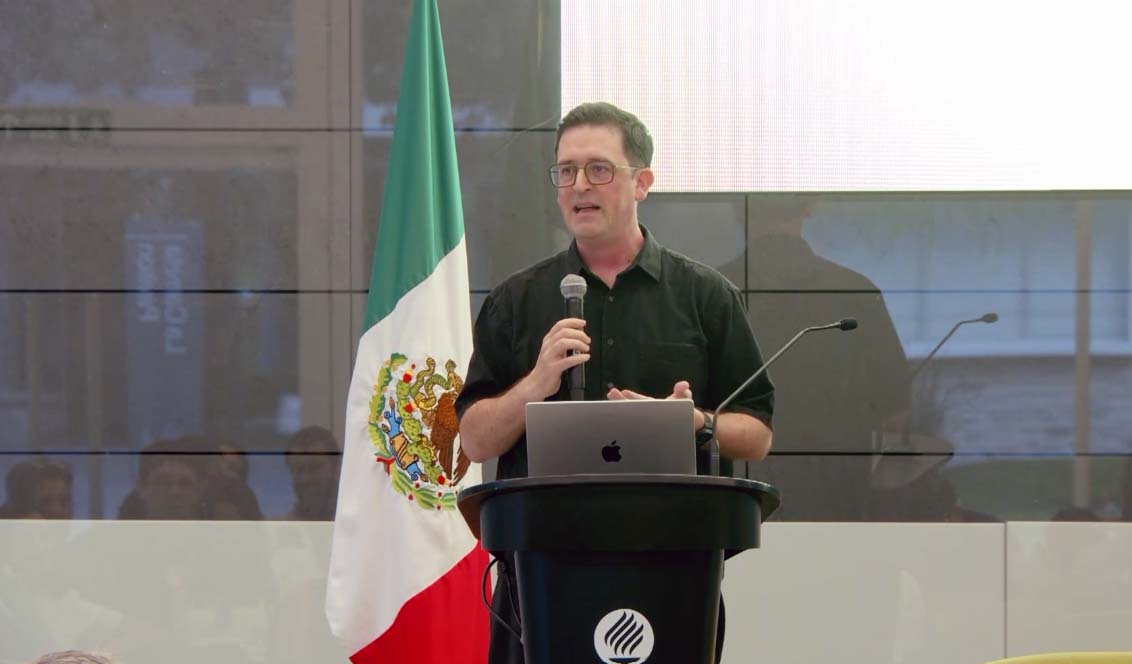
By Jonathan Massey, dean of the Taubman College of Architecture and Urban Planning, and a professor of architecture. Massey is an accomplished scholar of modern architecture and a leading authority on architecture and planning education.
Main Image: Photo by Marc-Gregor Campredon