A Network for Every Stage
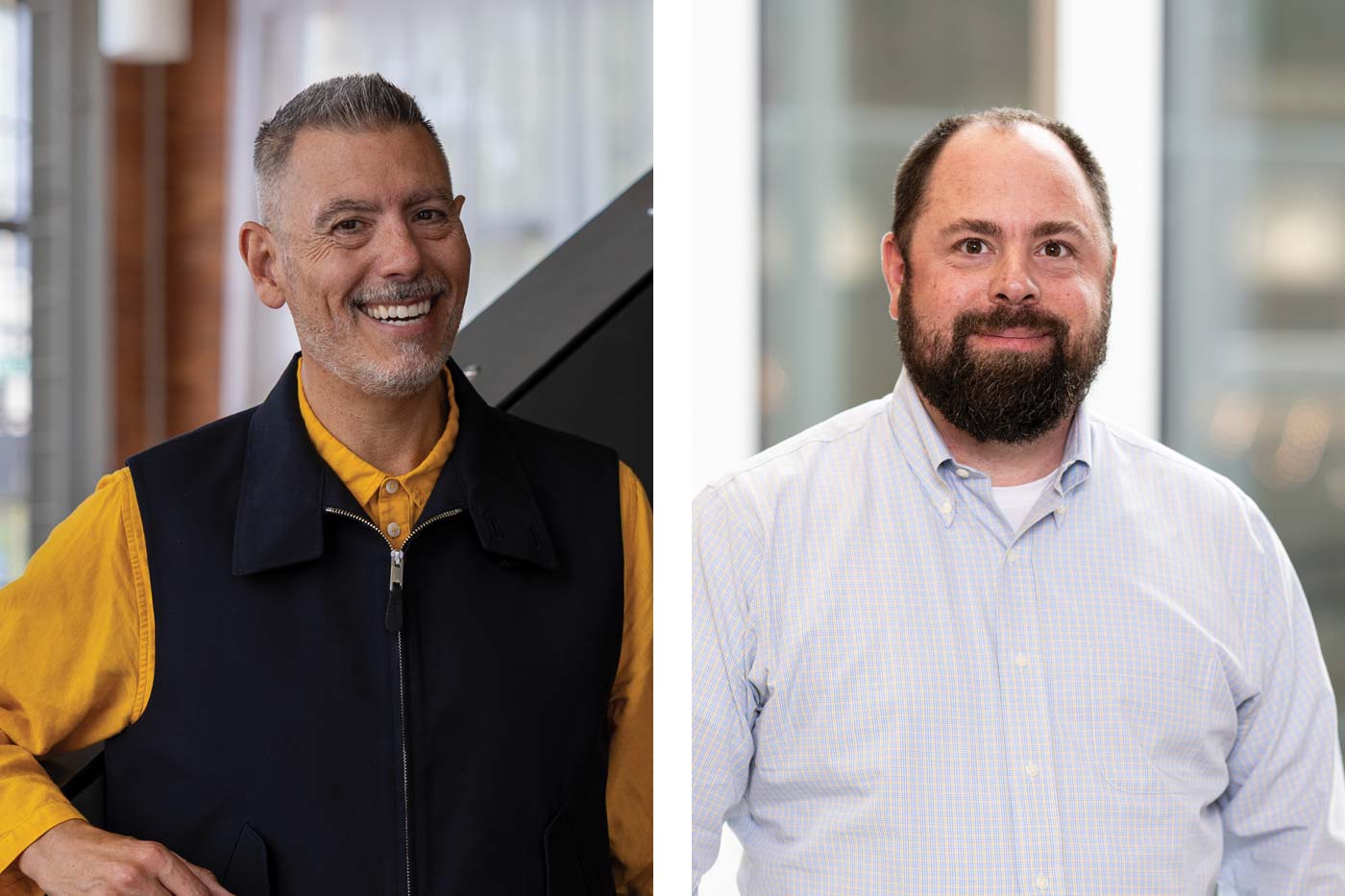
Dean Jonathan Massey and Jamie Simchik, M.U.P. ’15, principal of Simchik Planning & Development, discuss how alumni engagement expands networks, supports students, and informs Taubman College’s future.
Dean Jonathan Massey: As dean, I often think of our alumni as our eyes and ears out in a much larger world than we see from campus. Students come from all over, and faculty engage with broader communities, but our alumni are everywhere, working in architecture, AEC, real estate, and planning. They work across our professions and industries at scale, so they see patterns and understand the dynamics in those worlds. That helps us understand the context for the disciplines we teach and for our students seeking summer internships or looking to launch their careers. We learn continually from what our alumni are doing and what they report back to us.
Jamie Simchik: It’s interesting you say that. Before joining the Alumni Council and then the Dean’s Advisory Board, I wasn’t as familiar with the strategic direction of the college. Now, I attend meetings where I think, “I know someone who might be able to help with that.” The more we alumni know, the more we can help make connections that further that direction. It also connects me with graduates across class years, beyond those immediately above or below me, and opens the door to their networks. That’s been beneficial, since I was probably older than most in my class. It’s great to talk with people with different experiences and at different times in their lives.
Dean Massey: We want to support our students and alumni throughout their careers, from finding their first internships and jobs to finding project partners and new hires. The Alumni Council and the Dean’s Advisory Board let a small group of alumni participate in a highly structured way, but the receptions we host at major conferences and in alumni hubs are really about alumni connecting with each other. I love that you show up whenever you can, and you bring an open, engaging energy that reflects what we hope those receptions and gatherings provide. They are a chance not only to reconnect with folks, but to broaden their networks.
Simchik: I appreciate it. By hosting those receptions, you’re also engaging alumni who don’t make it back to campus regularly. You’re going to them, rather than asking them to come to you, and I think that’s been great for broadening those connections. One thing I loved about the Alumni Council was participating in speed networking sessions with students. I enjoyed it, just as I enjoyed interacting with alums as a student. Conferences and events are a great way to keep doing that, for alumni and for students.
Dean Massey: Discussions about higher education in an age of AI often center on the human community a university provides: The student peers you were talking about, and the student-faculty and student-staff relationships while you’re on campus. These relationships help you understand and navigate your field by giving you access to people through community connections.
Many think that human community will become more precious as our interactions become ever more technologically mediated.
Simchik: From a hiring standpoint, when you have AI helping students create resumes and technology helping employers review them, human connections seem even more important. I was a student before your time at Taubman, so I don’t know if you really appreciate the impact you’ve made on the alumni community. Today, it feels like opportunities I used to seek out are there to take advantage of. It benefits students and alumni. The climate for alumni-to-alumni and alumni-student interaction has vastly improved, and I hope it continues.
Dean Massey: That’s great to hear, and I want to credit our advancement team, because they really have been intentional with bringing back Portico, for instance, as a channel for connecting with alumni in print and also in the digital editions. They’ve also created compelling experiences, like securing special and memorable locations for conference gatherings. They work hard to amplify the value of alumni engagement.
Simchik: Attending those events is an easy way to get involved because you’re already there, and hopefully it’s a gateway to meeting people you didn’t interact with as a student. Alums love to share their stories, but if they’re not connected with the university in an ongoing way, the university might not know whether someone could come in to speak in a class or mentor a student.
Dean Massey: Tell me about the student you’ve been mentoring.
Simchik: Sam Sav is a second-year M.U.R.P. student. My wife, Carrie, babysat him when he was growing up. I was excited to learn he was interested in transportation planning and had decided to go to Taubman, where he could take the courses I took with Professor Joe Grengs and Professor Jonathan Levine. I see a little bit of myself in him. It’s been awesome to see the experience through his eyes and to see how much enjoyment he gets out of Taubman, and how much he’s learning.
Dean Massey: What changes are you seeing in your own field that students should be prepared for?
Simchik: One major change is in the use of technology in real estate. My day-to-day is developing, owning, and operating real estate. We chose a property management solution in 2019, but our tech stack is growing. When I think about how many platforms are out there in this space, I think it’s going to become increasingly necessary to understand the tools available and to be exposed to them as students, which makes the B.S. in Urban Technology or the new Master of Urban Technology so relevant. Maybe those students will launch a new platform that becomes a standard, as Robert Yuen, M.Arch/M.S. ’12, did with Monograph.
Dean Massey: One of the ways we brought urban technology into focus was with U-M alumni from other fields across campus, whether that’s LSA or Ross or Engineering, who were working in one facet or another of urban technology. We focus on Taubman College alumni in our activities, but our alumni connect with folks who graduated from other units, and even those of us on campus sometimes tap those broader alumni groups.
Simchik: I earned my Master’s in Urban Planning as well as an M.B.A., and then I also did the Graduate Certificate in Real Estate Development. With that cross-pollination, you have more access to alumni across the university, and that’s another way Taubman College benefits from being part of such a large research institution.
Dean Massey: That breadth is one of Michigan’s great strengths. Taubman alumni bring their expertise into a university-wide network, creating connections that benefit students, graduates, and the fields we serve.