


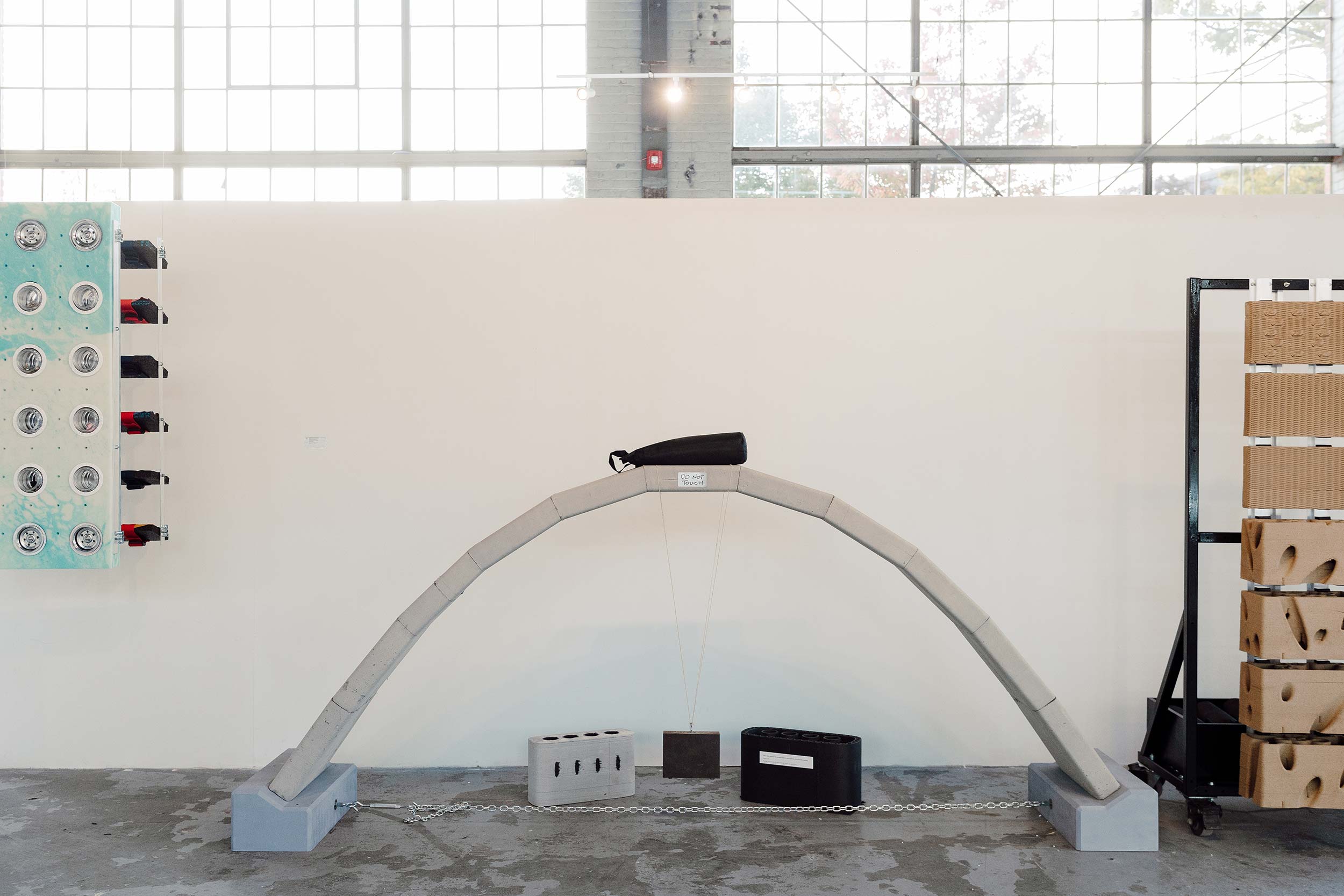
Ultra-thin layered 3D-printed recyclable and reusable formwork for casting complex concrete geometries
[2024 – Present]
While computational design has enabled the creation of complex geometries, construction remains challenged by inefficiencies and high costs. The proposed method involves creating bespoke, ultra-thin, layered 3D-printed reusable formwork by utilizing additive manufacturing, 3D printing techniques, and hollow-core sections, which can achieve a sustainable, zero-waste, low-carbon fabrication process.
The formwork wall is stiffened using truss-like sections to withstand the hydrostatic pressure of wet concrete on a large-scale construction, while hollow-core sections significantly reduce material usage. To demonstrate the feasibility of the method, an arch, a lightweight, thin concrete structure, was fabricated. The components were 3D-printed using a robotic arm, and concrete was cast within them. The formwork is ground, recycled, and reused.
The use of 3D printing technology for creating formwork for concrete has the potential to provide a solution to climate change and carbon footprint issues. It enhances geometric flexibility, leading to construction methods that use materials more efficiently and reduce waste, which can revolutionize the construction sector.
[ZERO WASTE FABRICATION]
Faculty:
Mohsen Vatandoost
Wesley McGee
Peter von Bülow
