


Design and Health
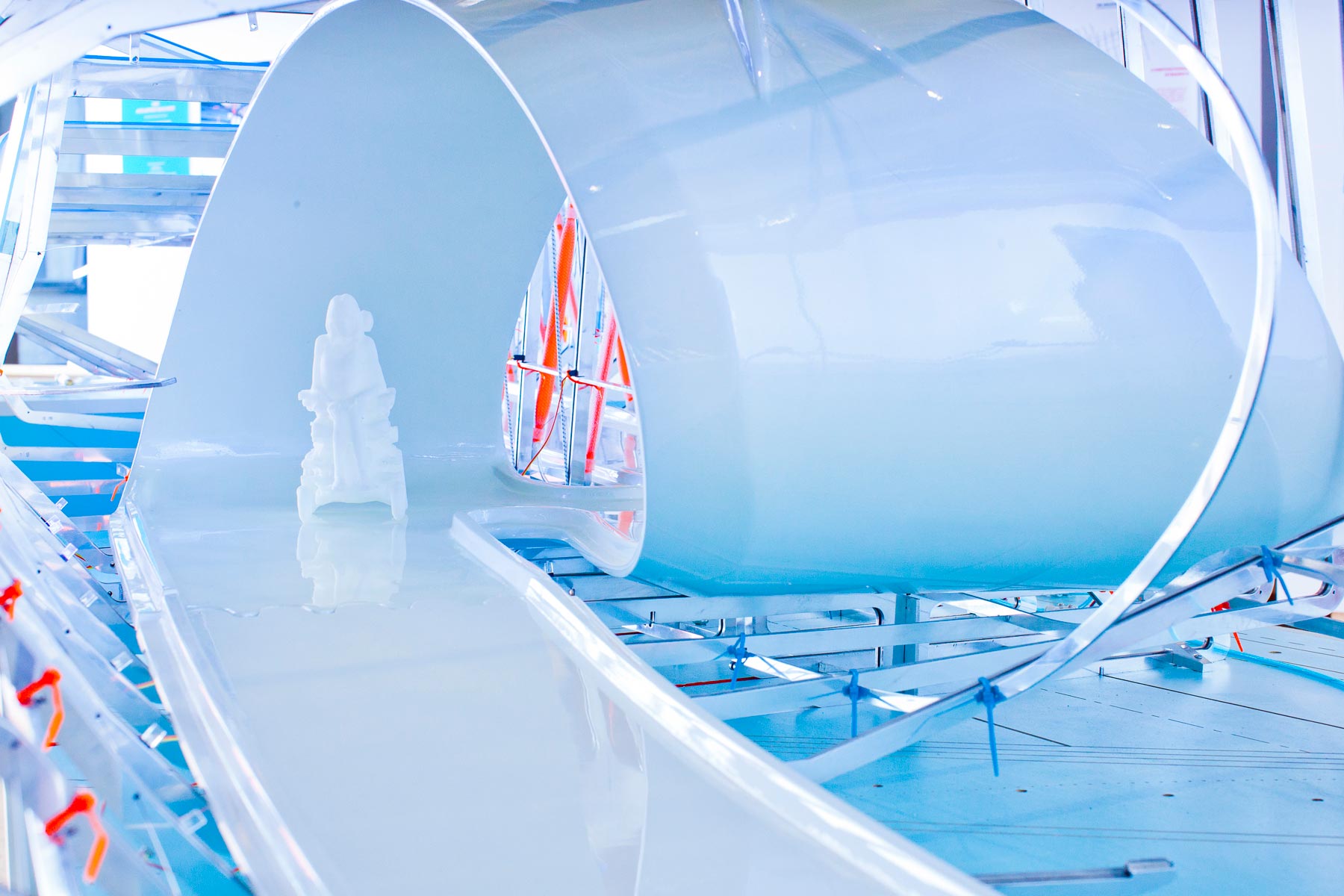
Design & Health focuses on how the built and natural environment, materials, and policy decisions shape health and well-being. The cluster brings together various design fields, clinical and public health, and research to understand how spaces can better support physical, mental, environmental, and social health. Work in this area connects design practice with evidence-based research to address health inequities, improve quality of life, and rethink how environments care for people over time.
How to Engage
For Collaborators and Partners
Design & Health faculty and teams work across disciplines, partnering with public health researchers, designers, policymakers, community organizations, and healthcare institutions. Projects often focus on translating research into real-world interventions. Whether you’re interested in collaborative research, pilot projects, or applying design to health challenges, reach out to individual faculty or affiliated teams to explore opportunities.
For Prospective Students and Research Assistants
Design & Health at Taubman College offers opportunities to engage in research that sits at the intersection of design, equity, and well-being. Students work alongside faculty on projects related to housing, environmental health, material systems, and human experience. Explore faculty work, lab groups, and ongoing initiatives, and reach out directly if you’re interested in contributing to research.
For Funders
Support enables interdisciplinary research, community-based projects, and the
development of design interventions that address urgent health challenges. Funding contributes to student research, fieldwork, prototyping, and the translation of research into policy, tools, and public-facing outputs. We welcome partnerships with foundations, public agencies, and organizations aligned with advancing health equity through design.
Research Scope & Societal Relevance
- Design & Health addresses a set of interconnected challenges:
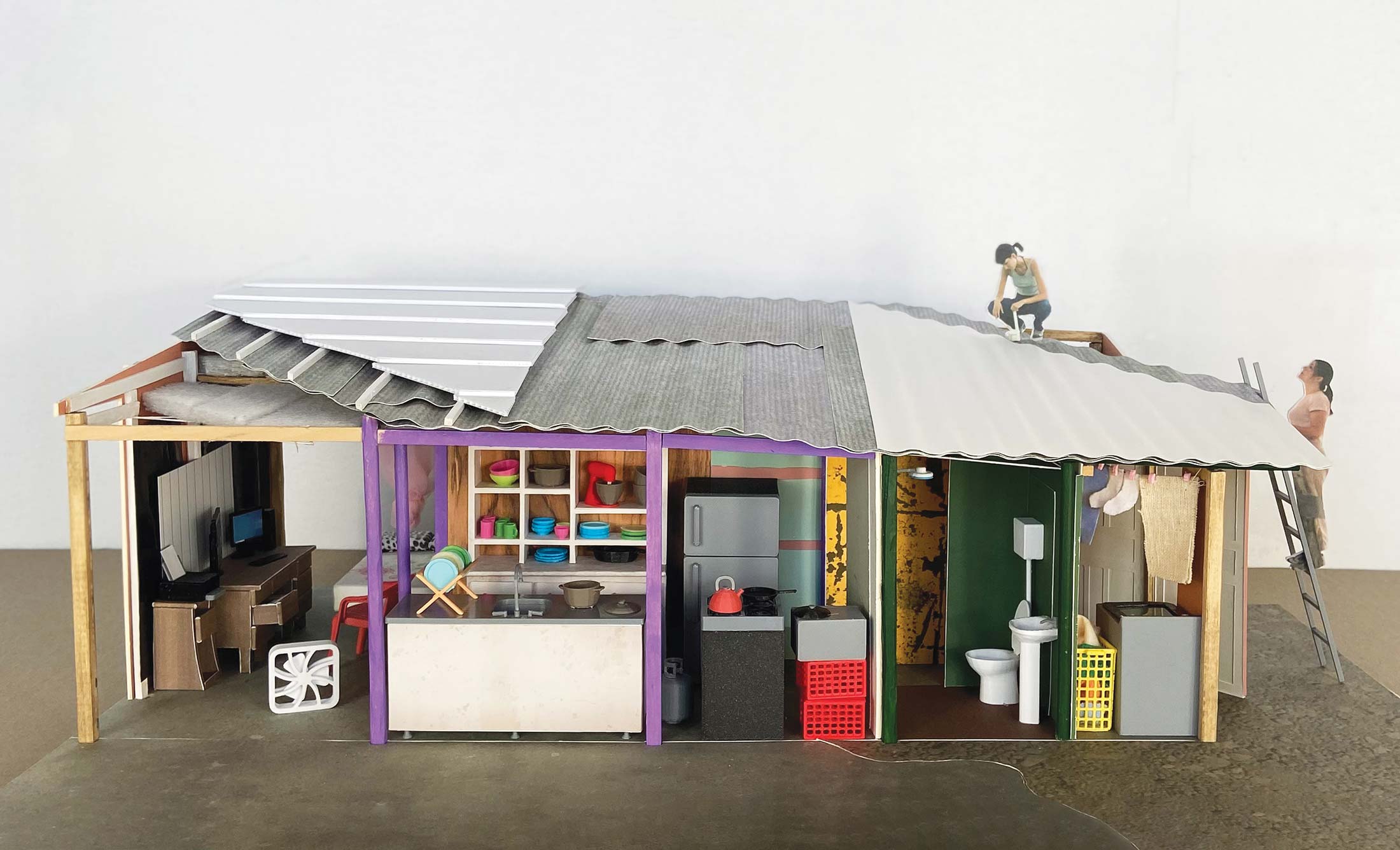
- Understanding housing as a critical determinant of health, including the impacts of urban renewal, gentrification, and housing insecurity.
- Investigating how built environments affect human perception, comfort, and well-being.
- Designing interventions that improve health outcomes at both the individual and community scale.
- Exploring how policy, planning, and design intersect to shape health equity across cities and regions.
- Advancing research that identifies what interventions work, for whom, and under what conditions.
- Reimagining environments as systems of care, where materials, spaces, and infrastructures actively support human health.
Faculty


Opportunities

Constellations of Projects & Methodologies
Design & Health is defined by projects that connect research and design while adapting to diverse health contexts and communities:
A residency at the Corning Museum of Glass investigating the importance of darkness in our lives and focusing on developing a series of kiln castings that relied upon geometry, thickness, and color to emphasize the difference between light transmittance and absorption.
Long Range is an experimental acoustic surface composed of slumped glass panes arranged in a double layer. It exhibits gradients of acoustic behaviors including reflection, diffusion, absorption, and transmission, accessed via various formal and geometric modifications of the glass panes. Moving from flat panels at one end, to increasingly slumped and perforated panels, Long Range culminates in deeply curved panels with porous openings. The panels aggregate into an acoustic and visual system of versatile behavior. Long Range moves fluidly through the range of acoustic behaviors: the flat end primarily exhibits acoustic reflection, the center diffusion, and the severe end absorption and transmission. It is important to note that all parts of the surface exhibit all four behaviors to some extent and result in an uninterrupted acoustic gradient.
Designing the Bridge
This initiative addresses that foundational barrier by developing and empirically testing a consumer-centered framework for productive academia–industry collaboration in health innovation. Rather than producing a single device or intervention, the project treats collaboration itself as a design challenge, creating a structured translational process that aligns scientific rigor, commercial feasibility, and public health impact. Using metabolic health as a test case, the initiative will co-develop and pilot a health-supportive ecosystem for first-year college students living in dormitories, generating a transferable model for how universities and industry can work together to translate health data into sustained behavior change at scale. In doing so, the project positions the University of Michigan as a national leader in prevention-focused, systems-level health innovation with durable institutional impact.
Prevention Research Center (PRC)
A CDC-funded research center focused on interventions in the built environment, including projects that address vacant land, environmental conditions, and their impacts on community health and well-being.
The MI-HealthyCity Tool identifies health equity gaps at the census tract level within the 24 largest cities in Michigan. Accessible to researchers, policymakers, and community organizations, this tool is a dataset that will help local communities promote health equity across Michigan.
A research project exploring how light shapes human health, perception, and spatial experience, with a focus on circadian rhythms and environmental conditions.
Empathetic Multi-modal Behavioral Response and Adaptive Care Environments (EMBRACE)
Social isolation affects over 50 percent of people with autism, post-traumatic stress disorder, or dementia, negatively impacting their physical and mental well-being. To combat this, the project will design sensor-laden, sensory-responsive knitted wearables that can gather real-time information about the surrounding environment while also delivering novel sensory feedback. This intends to help caregivers and neurodiverse people better identify the nature of both overwhelming situations and preferred activities, allowing them to respond and adapt accordingly.
ASICS x Michigan Sport Innovation Center
The University of Michigan has announced a new, multiyear research collaboration with ASICS to establish the ASICS x Michigan Sport Innovation Center. The pioneering research effort established through U-M Innovation Partnerships aims to advance human performance and sport science through multidisciplinary collaborations across campus, including Taubman College’s Sean Ahlquist.
What does a quiet working space look like? Visualizing faculty and staff preferences at the U-M
A research project focused on improving inclusivity in workspaces by documenting faculty and staff sensory preferences and generating adaptable design options that reflect diverse needs, resulting in design guidelines and visual concepts for more accessible environments.
Fresh Rapids: All Graphics Seminar
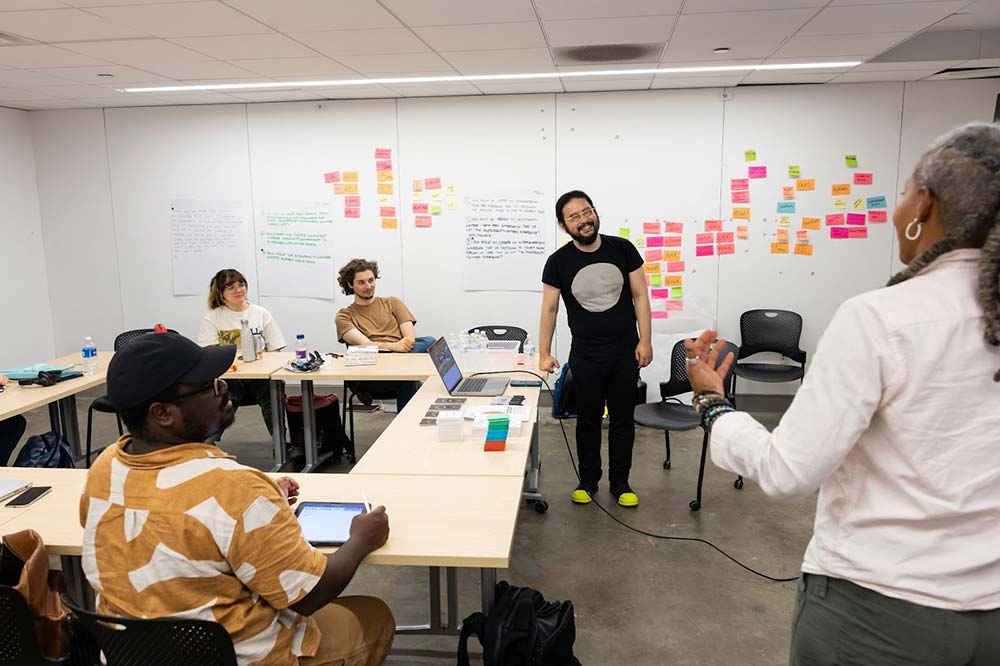
A seminar centered on accessibility and design for disability, combining community engagement with creative practice. Students collaborate directly with members of the disabled community, translating their stories into an accessible, student-produced magazine titled Approachable, as well as a short commercial highlighting disability narratives. Building on this work, Fresh Access (All Graphics) extends the ambition to “draw to architecture,” positioning accessibility not only as a design responsibility but also as a communication challenge. The course operates as both a research seminar and design workshop, exploring how graphic design can expand public understanding of accessibility in and through the built environment.
Inclusive Communication & Disability Advocacy
This project repositions accessibility from a technical afterthought to a central concern in design culture by focusing on inclusive communication practices. Supported by the University of Michigan SUCCEED grant, the work engages members of the disability community through workshops, interviews, and collaborative research to develop new methods for articulating lived experiences of the built environment. The project includes the development of a book and exploratory design of an assistive communication device that enables disabled individuals to more directly express their needs, desires, and frustrations.
Longer-Term Goals & Future Objectives
- Advancing design-driven approaches to health equity through interdisciplinary research.
- Expanding intervention-based research that connects design, policy, and measurable health outcomes.
- Developing new frameworks for understanding environments as systems of care.
- Strengthening collaborations between designers, public health researchers, and communities.
- Supporting research that translates into tools, policies, and built projects with real-world impact.
- Designing for accessibility by creating environments that enable rather than disable, and embedding this responsibility into both practice and education
Publications
Affiliated Labs



 Link copied