


Food Systems
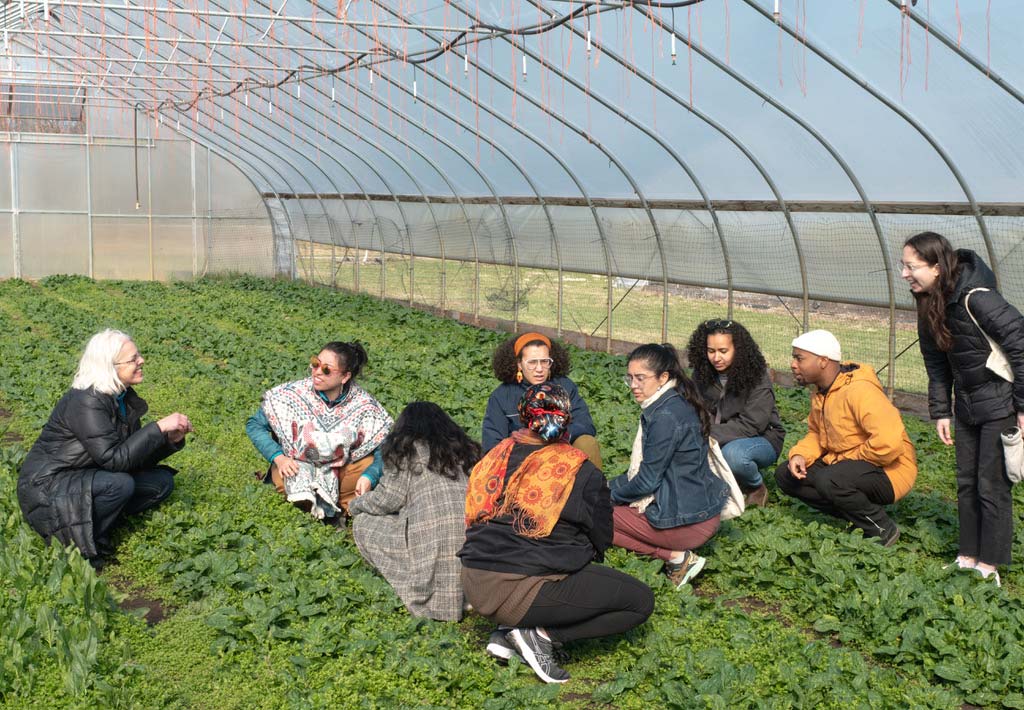
Food Systems engages an interdisciplinary mix of students, faculty, and communities at local and global levels to learn from and build food systems that are health-promoting, economically viable, equitable, and ecologically sound. Work in this area connects research and planning practice to address food inequities, support under-resourced farming communities, and rethink how land use policy can better serve both people and the planet. Farmland in the United States faces mounting pressure from development, making it increasingly difficult for smaller and under-resourced farmers — including emerging farmers who are young, of color, from marginalized backgrounds, or women — to access the land they need to farm. At the same time, solar energy development, while necessary for climate adaptation and mitigation, competes for the same type of flat, accessible land that agriculture depends on. This creates a new layer of pressure that planners and policymakers have yet to fully reckon with.
Local governments are among the most important gatekeepers for land use change, yet they often lack the tools, frameworks, or political will to make farmer access visible in planning processes. Food Systems Initiative research works to change that — generating evidence, planning frameworks, and policy strategies that help planners act on the connections between food systems, climate, and equity.
How to Engage
For Collaborators and Partners
Food Systems Initiative faculty and students work across disciplines, partnering with local governments, planning departments, community organizations, farmers, and public health researchers. Projects often focus on translating research into actionable policy — from food-informed climate planning to land use strategies that improve farmland access for under-resourced growers. Whether you are interested in collaborative research, pilot projects, or applying planning and design to food systems challenges, reach out to individual faculty or affiliated teams to explore opportunities.
For Prospective Students and Research Assistants
Food Systems Initiative at the University of Michigan offers opportunities to engage in research at the intersection of food systems, climate adaptation, and equity. Students work alongside faculty and doctoral researchers on projects related to food policy, land use planning, agroecology, and community-based planning. Explore faculty work, fellowship programs, and ongoing initiatives, and reach out directly if you are interested in contributing to research.
For Funders
Support enables interdisciplinary research, community-based projects, and the development of planning tools and policy frameworks that address urgent food systems challenges. Funding contributes to student research, fieldwork, and the translation of research into policy and public-facing outputs. Faculty welcome partnerships with foundations, public agencies, and organizations aligned with advancing food equity, climate resilience, and farmland access. To explore partnerships or student opportunities, contact faculty and PhD students.
Research Scope & Societal Relevance
- Food-Informed Climate Planning: Exploring the role of food systems in adapting to and mitigating climate change, and how local governments can translate these circumstances into Action.
- Farmland Access and Emerging Farmers: Examining how land use planning in Minnesota and beyond can better support under-resourced farmers — including young farmers, farmers of color, and women farmers — who have historically struggled to access land.
- Solar Development and Agricultural Land: Investigating the tensions between solar siting and farmland preservation, and identifying planning strategies that allow farmers to leverage solar development to increase land access rather than lose it.
- Food Systems Policy and Planning: Investigating how public policies, planning frameworks, and multilevel governance shapes food access and sustainability.
- Food Justice and Sovereignty: Studying the structural inequities that drive food insecurity and diet-related health disparities, and supporting community-led solutions.
- Participatory and Community-Based Research: Co-developing tools, data, and capacity with community organizations to create just and lasting change in local food systems.
People, Teams, and Partners



Constellations of Projects & Methodologies
Food Systems Initiative is defined by projects that connect research and planning while adapting to diverse food systems contexts and communities:
The Farmland and Solar Project
A collaborative project with the Graham Sustainability Institute examining the intersection of solar energy development and agricultural land use. The project investigates how planners and policymakers can make farmer access more visible in land use decisions, and how solar development can be structured to support rather than displace under-resourced farmers.
Institute for Food, Nutrition and Health Policy
Lesli Hoey will lead Taubman College’s involvement in the new Institute for Food, Nutrition, and Health Policy. A hub for innovative, community-informed policy research and leadership development, the IFNHP will inform health-focused food and nutrition-related legislation, regulations, and programming through interdisciplinary expertise.
Longer-Term Goals & Future Objectives
- Advancing research on food-informed climate planning and its translation into local government action.
- Expanding work on farmland access for emerging and under-resourced farmers, with a focus on land use planning tools and policy frameworks.
- Developing planning strategies that address the tension between solar energy siting and agricultural land preservation.
- Strengthening collaborations between food systems researchers, planners, policymakers, and farming communities.
- Supporting research that translates into tools, policies, and real-world practice with durable community impact.

 Link copied