Liang explores local impacts of airport infrastructure
Taubman College’s Xiaofan Liang analyzes the relationship between Atlanta’s international airport and local biking and pedestrian infrastructure in a paper recently published in Transportation Research Record. Liang, an assistant professor of urban and regional planning who joined the college in 2024, conducted most of the research during her graduate studies at the Georgia Institute of Technology.
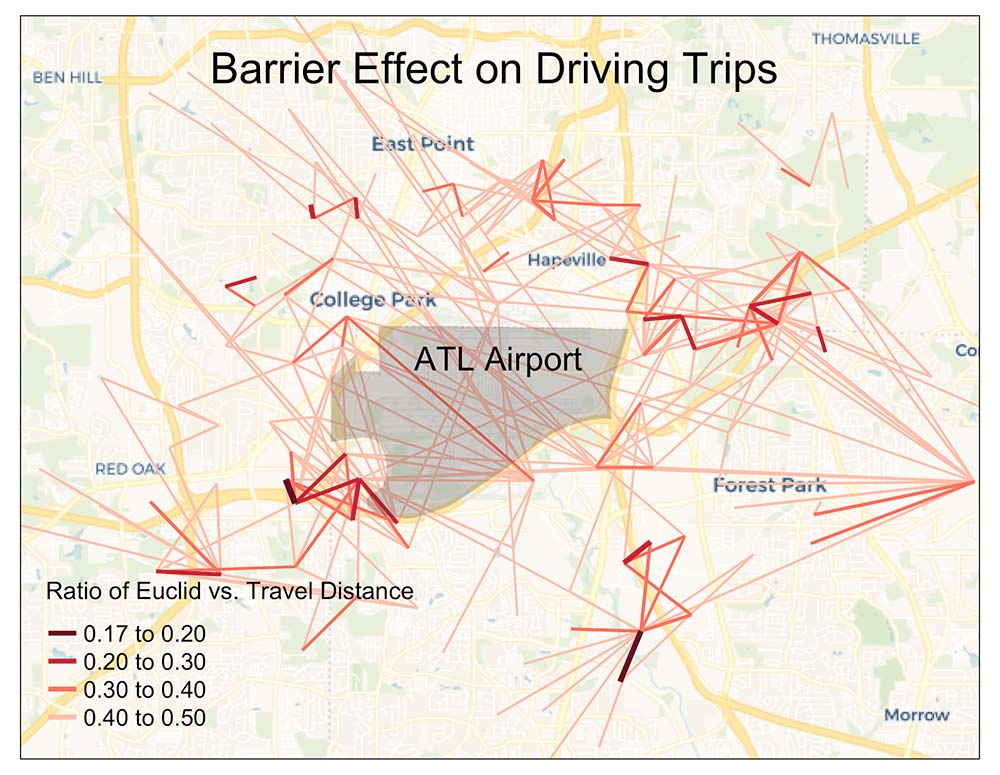
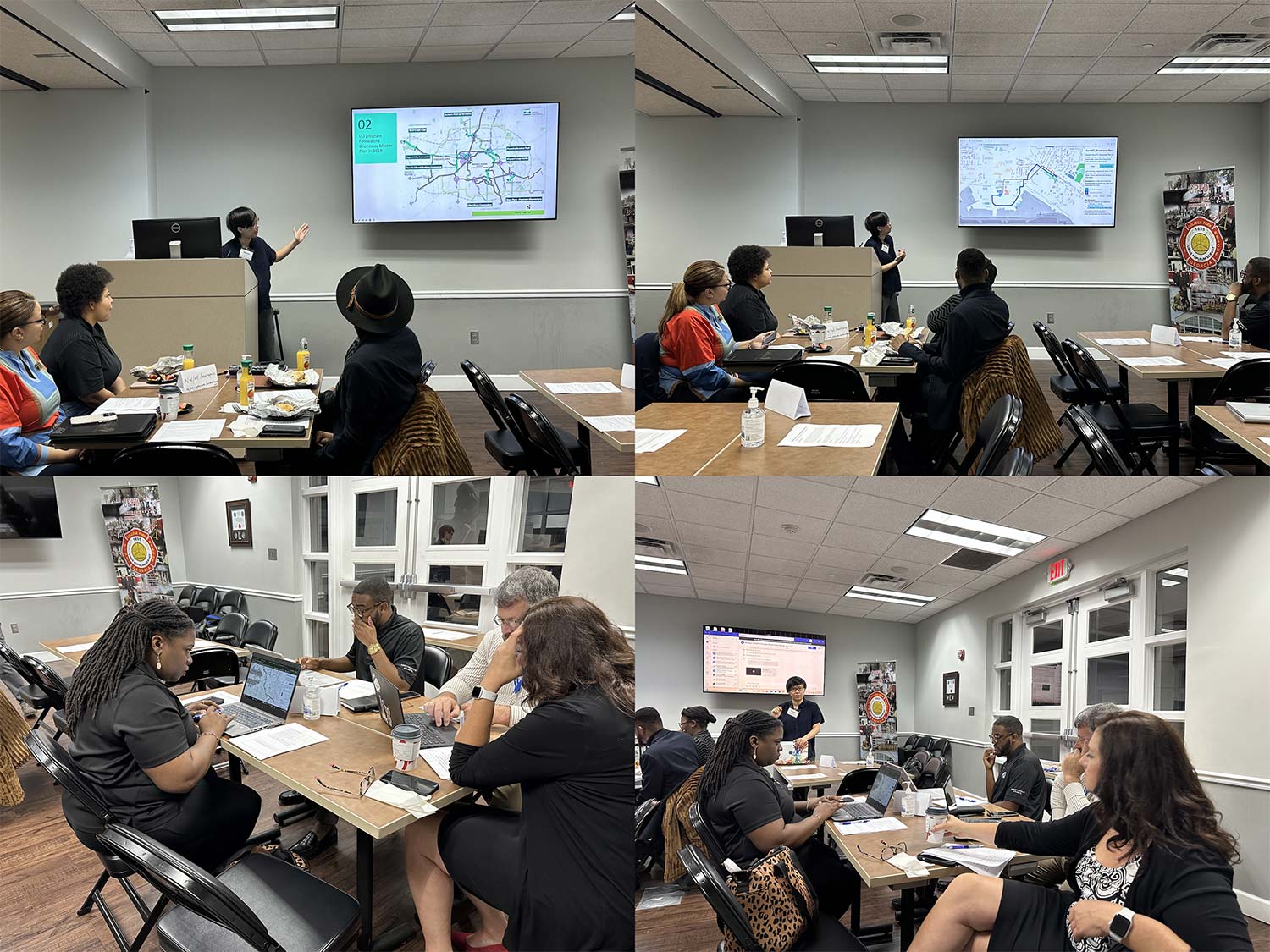
Liang was inspired to investigate the topic during an urban design studio taught by Georgia Tech’s Perry Yang, director of the school’s Eco Urban Lab. During the studio, she worked with Aerotropolis Atlanta Alliance, Inc., and was shocked to learn of the inconvenience of living near an airport. She argues that, while part of a global transportation network, airports tend to overpower local land uses in favor of regional travel, limiting mobility and the diversity of the built environment.

As part of her research, Liang analyzed the AeroATL Greenway Plan, a project inspired by efforts to improve economic development around the airport. Comparing the proposal and the impacts of the airport’s physical footprint, Liang asked, “Is it possible to build more integrated network infrastructure so that everyone and every mobility mode — especially walking and biking — can also have a place?”
In an interview with the Taubman College Newsroom, Liang said she was making a specific argument that the airport, which she called “exclusive network infrastructure, is a good case study of the conflict between a network and the place-based, physical world.
“If you live by an airport, you can’t really compete with the airport’s dominant influence over its surrounding built environment,” Liang said. “So, this is actually what I consider a pretty creative and interesting, bottom-up planning example to contest this dynamic. My role in the research, on the one hand, is to provide quantitative arguments to frame this issue within the framework I proposed. And then the second thing is to try to support the scenario development of the AeroATL Greenway Plan, to help them think through what it means when they build this greenway, what kind of benefit they will create, and see if the computational approach, in any way, can help them move the proposal forward.”
Moving forward, Liang plans to continue researching the complex relationship between networks and the physical environment.
“I’m interested in the concept of network duality, which means you have a network infrastructure, but this infrastructure is serving a very specific population, very specific places, or specific types of flows, but then it also marginalizes others at the same time,” Liang said. “So a network infrastructure like an airport is a good example for that: you’re serving a lot of regional passengers. You’re serving a car-driven mobility flow almost at the expense of local pedestrian and biking flows. I think a lot of the urban dynamics and challenges we observe could be reinterpreted under this new lens.”

Read the full article, “Transforming Mobility Barriers to Connectivity: Examining the Impact of the AeroATL Greenway Plan in Reconnecting Communities Around Aerotropolis Atlanta,” at Liang’s website.
— Joshua Nicholson