Lee shares longevity research at Seoul Design International Forum
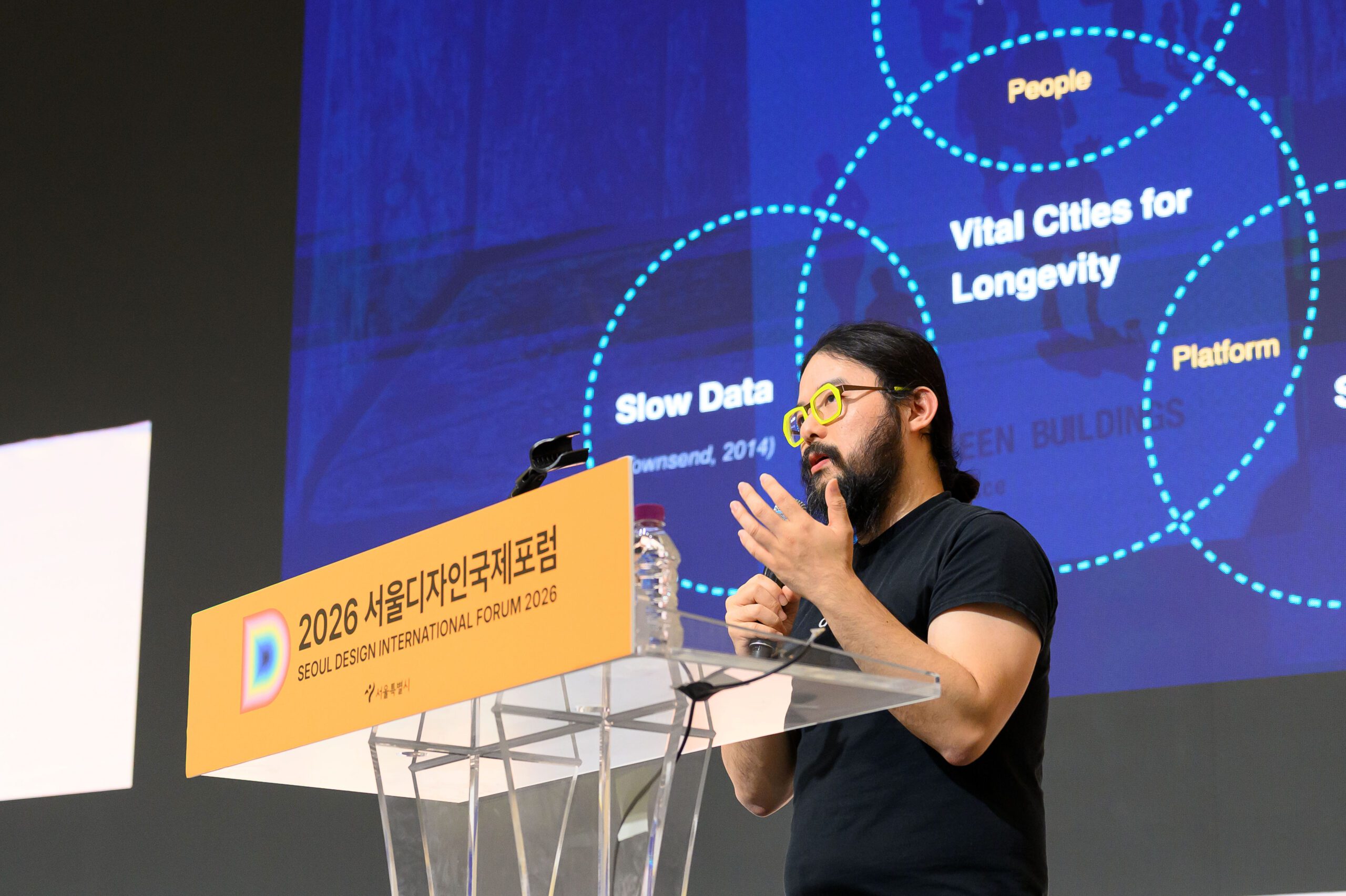
Sheng-Hung Lee, assistant professor of urban technology at the University of Michigan’s Taubman College of Architecture and Urban Planning and director of the d-mix lab, spoke at the 2026 Seoul Design International Forum, held Sept. 15 at Dongdaemun Design Plaza (DDP) in Seoul, South Korea. His talk, “Vital Cities for Longevity: People, Process, and Platform,” was part of the forum session “Urban Ecosystems Evolving Through Design.”
Organized by the Seoul Metropolitan Government, the international forum brought together leaders across design, architecture, science, technology, and urban policy to explore how cities can evolve toward more life-centered futures. Lee’s presentation connected this conversation to his research in design for longevity and urban technology, asking how cities can better support people across longer lifespans and increasingly multigenerational societies.
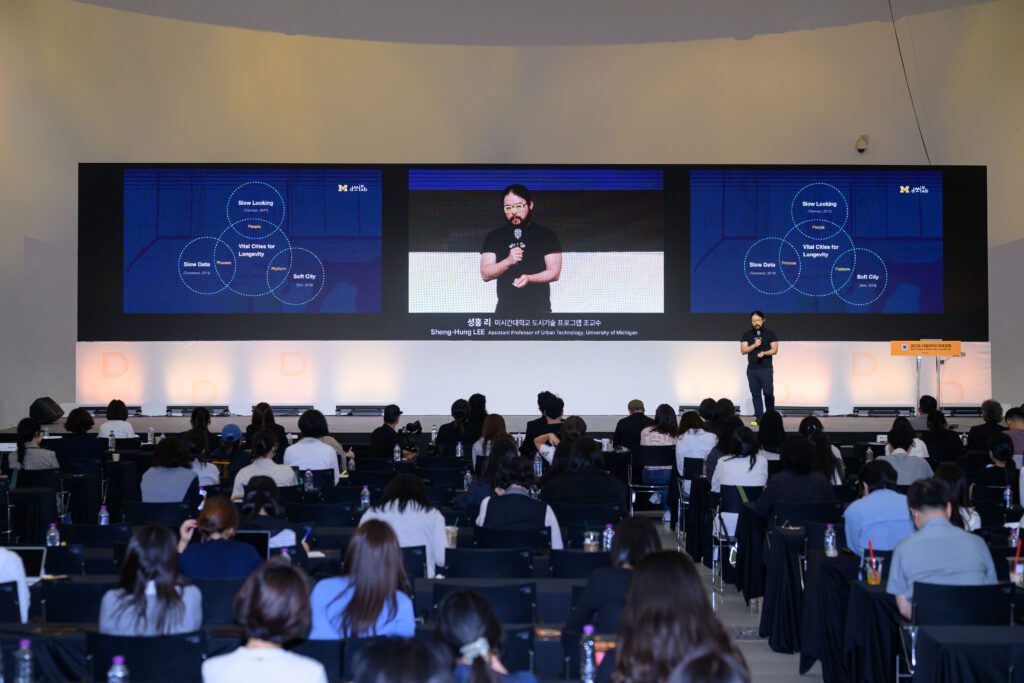
Drawing from research at d-mix lab, Lee introduced a human-centered system design approach that combines evidence-based research, service innovation, and emerging technologies to create healthier and more equitable multigenerational products, environments, services, and cultures.
The presentation focused on the interconnected dimensions of people, process, and platforms. Through this lens, Lee shared his ongoing community-based research with Dexter Senior Center in Dexter, Michigan, on reimagining senior nutrition and communal dining not simply as a meal program, but as a broader service ecosystem connecting experiences with funding, policy, governance, infrastructure, service providers, staff, volunteers, and older adults.
Lee also presented his emerging research with Rejara on AI-mediated longevity, examining how digital platforms can help people navigate life planning and caregiving. This work introduces a Designing Across Life Horizons (DALH) framework that considers how we might design not only for a person’s needs today, but across changing circumstances, relationships, and possible futures.
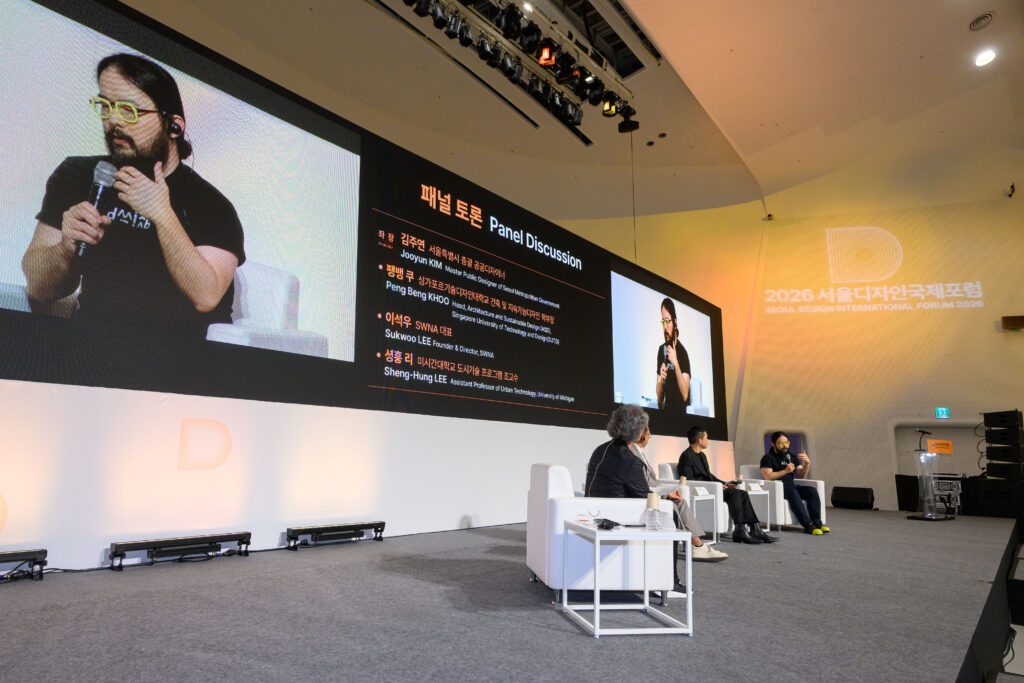
Together, Lee says these projects frame longevity as an urban technology and systems-design challenge, exploring how emerging technologies, services, policies, physical environments, and community infrastructure can work together to support people throughout longer lives that are more connected, equitable, and meaningful.