Leveraging machine learning models and big data analysis for building performance predictions
[2025 – Present]
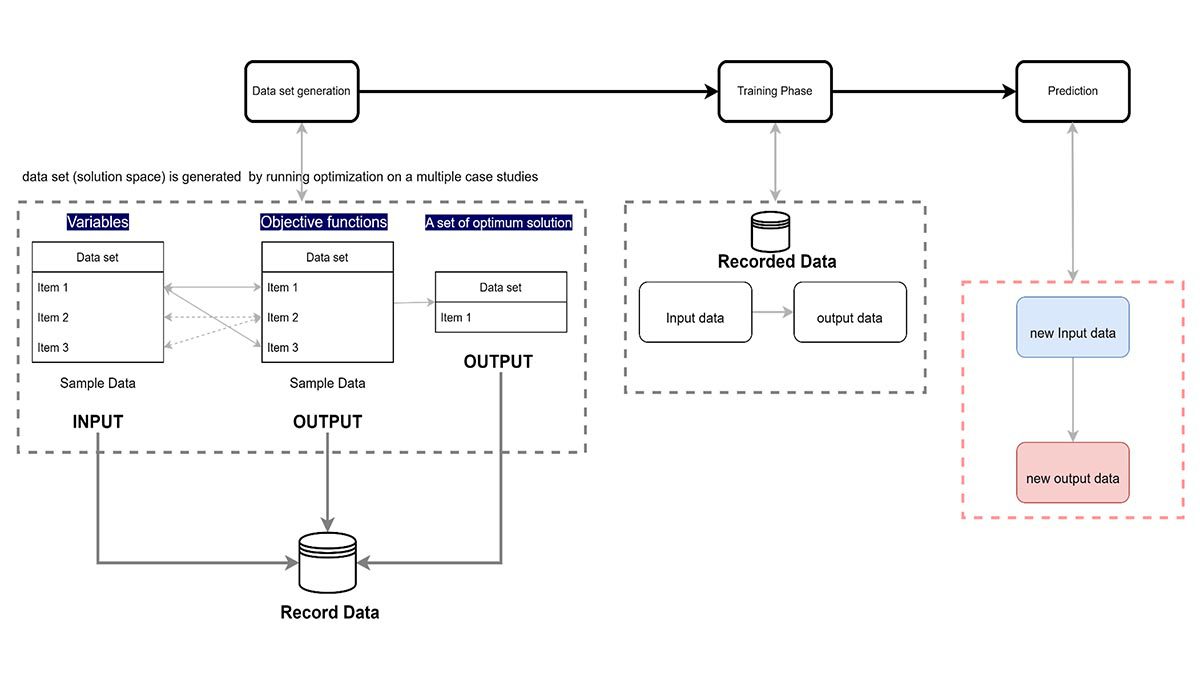
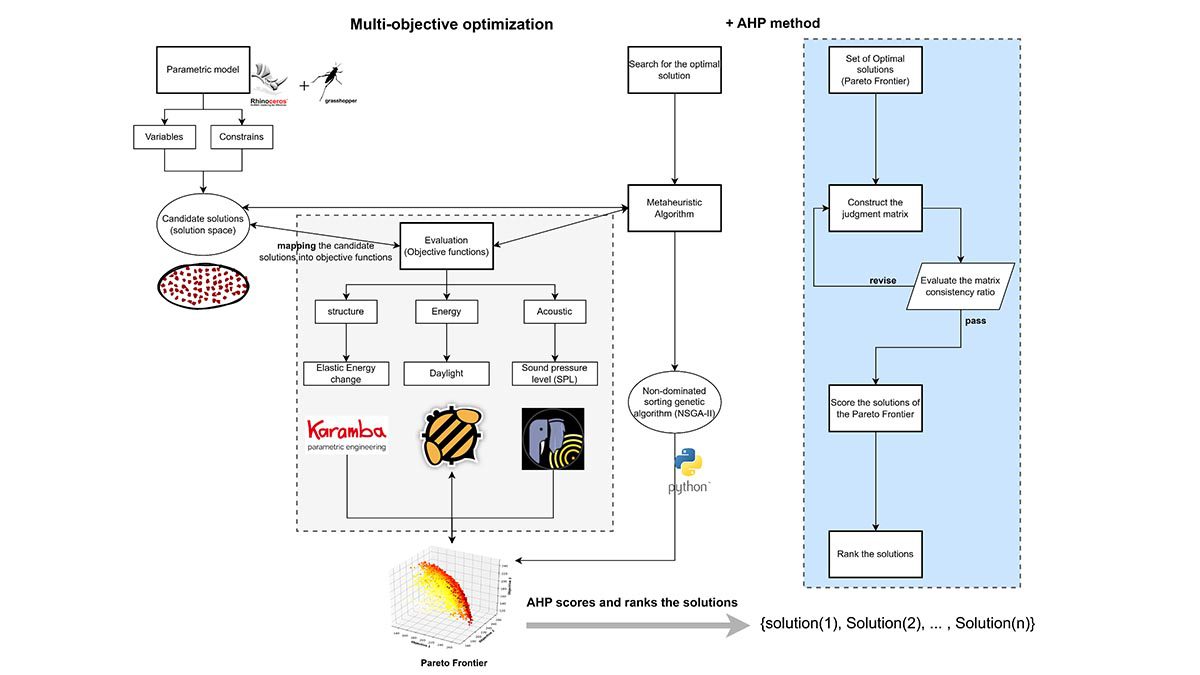
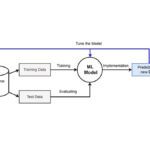
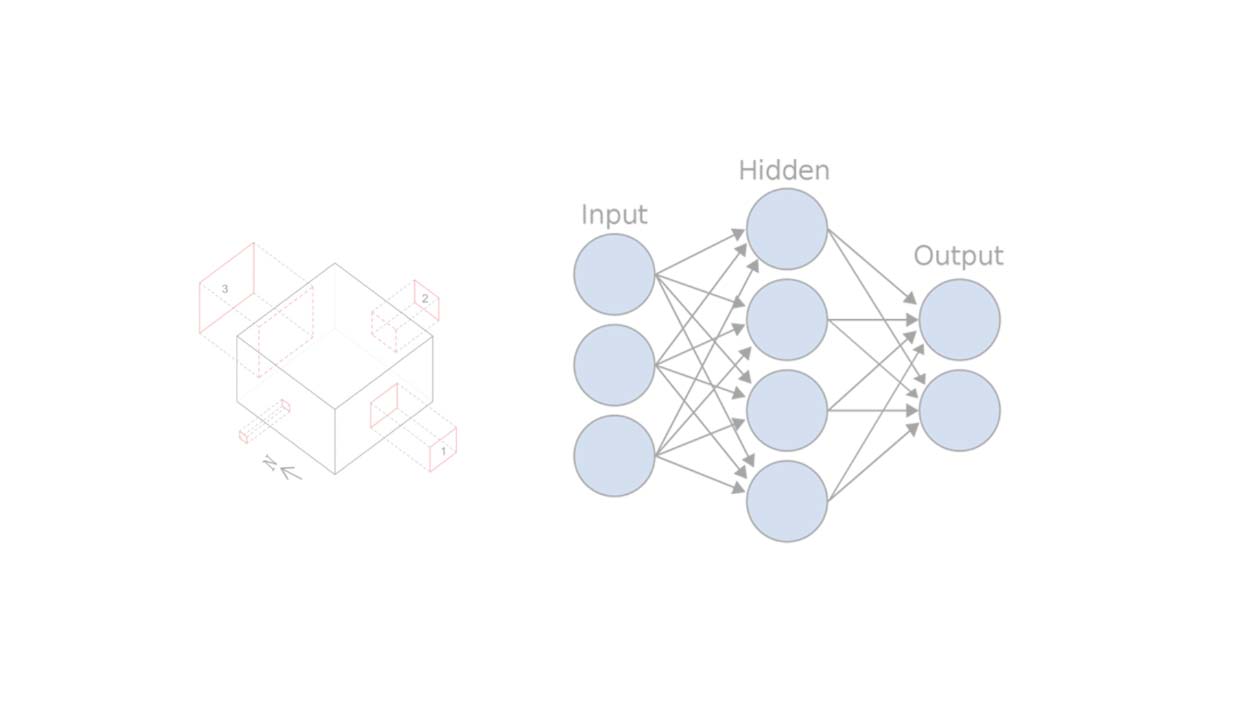
While computational design for measuring building performance is precise and reliable, it incurs high computational costs associated with factors such as the complexity of simulation models and the granularity of input data, which present a significant challenge. In contrast, data-driven design and prediction based on large datasets can assist designers in evaluating building performance quickly and accurately at the early stages of design. This research utilizes advanced machine learning algorithms (RF, DT, KNN, SVM) and artificial neural networks (ANN) to achieve high predictive accuracy.
The challenges in utilizing ML models include the fact that these datasets do not exist or are not accessible; thus, part of this research focuses on generating such data for building an ML model.
The use of ML models has the potential to provide a solution to climate change and carbon footprint issues by enabling more accurate predictions, optimizing energy consumption, improving climate modelling, identifying emission reduction opportunities, and supporting data-driven policy and decision-making.
[MACHINE LEARNING PERFORMANCE MODEL]
Faculty:
Mohsen Vatandoost
Lars Junghans
Peter von Bülow