


Heat, Health, and the Built Environment
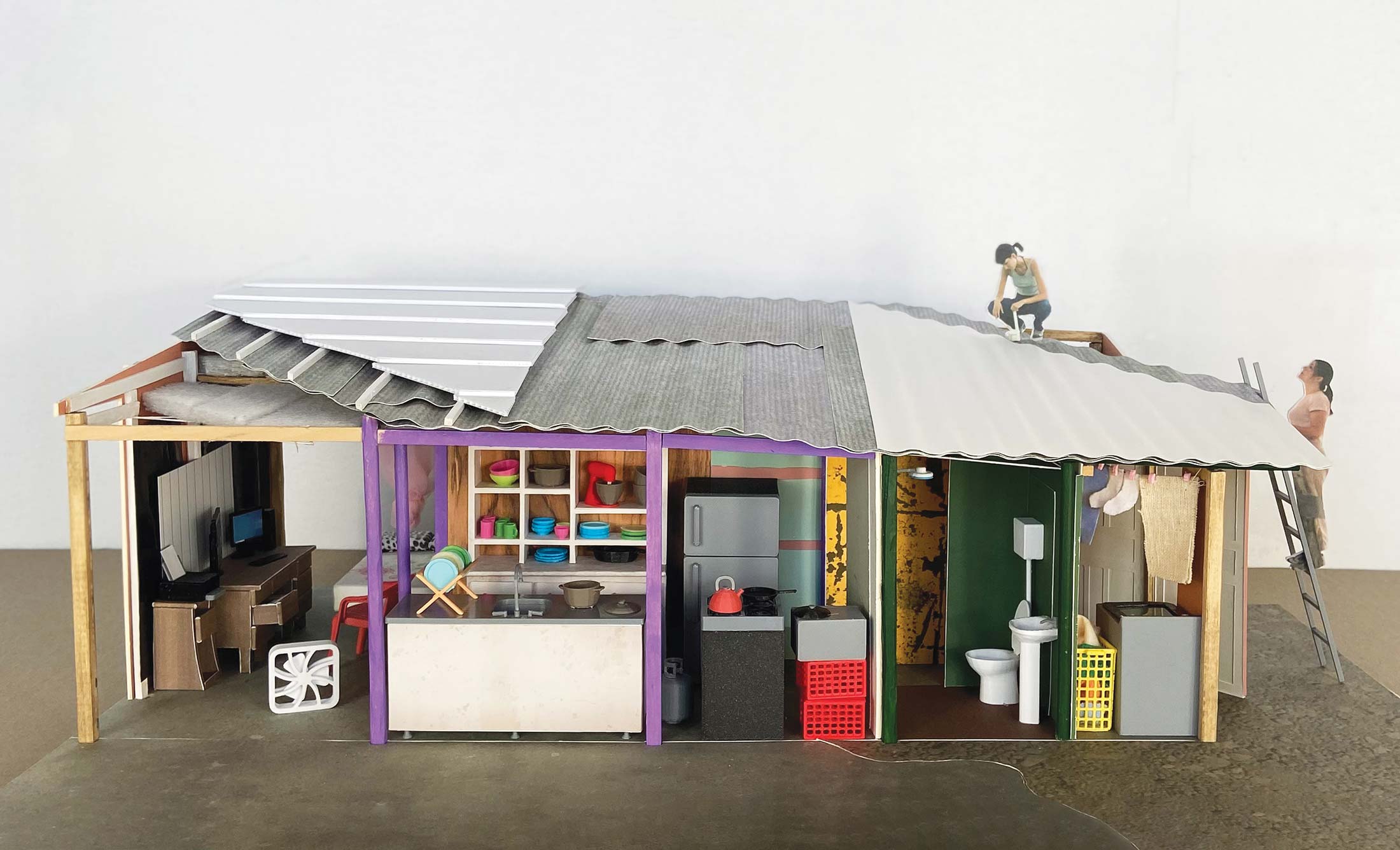
The Heat, Health, and the Built Environment cluster at Taubman College is a dynamic constellation of interdisciplinary projects that spans faculty, staff, researchers, and students from across the University of Michigan, as well as global partners committed to addressing the urgent challenges of heat stress, climate adaptation, and health equity through modifications to the built environment.
By leveraging diverse expertise and methodologies from urban planning, building science, anthropology, architecture, public health, epidemiology, implementation science, and participatory design, the Heat, Health, and the Built Environment cluster advances practical, community-driven, and innovative options for households facing uncertain and extreme temperatures and weather patterns—especially in informal settlements and rapidly urbanizing regions.
How to Engage
If you are interested in supporting the work, collaborating on shared projects, or joining a team, please reach out directly to any of the listed faculty with your interests and how we might work together.
For Funders
Support research and implementation that advances community resilience and health. We use funds to enable research training, work with student research assistants, conduct field research and implementation activities, analyze data and evidence, procure and test materials, and develop guides, policy briefs, and peer-reviewed publications.
For Collaborators and Partners
Co-design, pilot, and scale interventions. We often seek partnerships to develop and harmonize local data, connect expertise to challenges, and help extend networks of support
For Prospective Students and Research Assistants
Join interdisciplinary teams tackling global, socio-technical challenges in the built environment.
People, Teams, and Partners
This cluster encompasses both individual faculty-led projects, as well as collaborative team research programs and global research coordination networks.
Professor Larissa Larsen’s research in urban and environmental planning, climate adaptation, and health equity focuses on the intersection of heat mitigation, green infrastructure, and public health in cities in Michigan, North America, and East Africa. Larsen documents the magnitude of extreme heat and stormwater flooding and ‘tests’ the effectiveness of different design and policy interventions. Her research is highly interdisciplinary and she incorporates many ‘physical/natural/health’ concepts and measures and works with faculty in public health, civil and environmental engineering, and urban climatology.
A multi-disciplinary team composed of Ana Paula Pimentel Walker, Lars Junghans, Ana Morcillo Pallarés, Jonathan Rule, María Arquero de Alarcón, Erinn Cameron, Gabriel Harp, and Eunsoo Hyun is focused on making homes and communities more resilient to the impacts of extreme weather and heat. Taubman College faculty actively collaborate with U-M faculty from the School of Public Health, the Institute for Social Research, the School of Social Work, as well as the U-M Center for Global Health Equity. The team works directly with local implementing NGOs, collaborating universities and research partners, municipal governments, research sponsors, and community organizations — with active projects in Michigan, the United States, Brazil, Colombia, and Burkina Faso. Each team member contributes unique strengths in design, climate adaptation, housing, participatory research, and technological innovation, and, together, they are working to integrate these strengths and partnerships to mobilize knowledge and implement lasting benefits.

Research Scope & Societal Relevance
Cluster projects address critical, interconnected issues:
- The impacts of extreme heat on health, comfort, wellbeing, and productivity in informal and low-income housing, neighborhoods, and communities.
- The urgent need for scalable, affordable, and culturally relevant solutions.
- Resilience to extreme weather, adaptation planning, and empowerment of communities through knowledge-sharing and practical resources.
- Bridging the gap between technical standards and local realities in building performance, urban design, and health outcomes.
- Evidence and implementation know-how for effective design and policy options.
Constellations of Projects & Methodologies
The cluster is defined by projects and outputs that share methodological threads while adapting to local contexts and community needs.
Field-Based Data Collection
Documenting housing typologies, materials, land-use, spatial layouts, occupancy, and microclimates.
Urban Heat Vulnerability Mapping
Spatial analysis and policy recommendations for climate adaptation in cities.
Comparative Simulation & Modeling of Interventions
Simulation-driven evaluation of wholistic approaches to home modifications for improved health outcomes using tools such as TRNSYS, EnergyPlus, and ANSYS for building comfort modeling and dynamic thermal and fluid analysis.
Passive Cooling for Impacted Communities, Informal Settlements, and Precarious Households
Collaborative research and implementation of cost-effective interventions with community partners.
Design and Construction
Architectural design and technical expertise in construction for new approaches to building modifications.
Participatory Design & Community Engagement
Participatory workshops and field studies with local residents, builders, and community organizations to identify, co-create, and/or prioritize options and implementation approaches, assisted by illustrated assembly guides and visual frameworks.
Implementation and Technical Exchange Workshops
Convening, training, and knowledge exchange with residents, builders, municipal agencies, and NGOs.
Policy Research and Advice for Prevention and Preparedness
Translating research into actionable recommendations for local governments, agencies, and research coordination networks.
Iterative Optimization
Testing and refining low-cost passive cooling strategies for performance, feasibility, and desirability.
Communications Resources for Mobilizing Knowledge
Illustrated assembly and retrofit guides for passive cooling implementation; technical reports, policy briefs, and peer-reviewed publications; and training materials, workshop session planning, and strategic communications for communities, practitioners, and policymakers.
Multi-Criteria Evaluation
Balancing technical effectiveness, affordability, cultural fit, and pathways to implementation.
Globally Engaged Research
Experiential learning and engaged research training with global partners. Comparative approaches that reveal insights for dynamic local contexts and conditions.
Longer-Term Goals & Continuing Future Objectives
- Expanding the research to additional impacted communities with need, locations, and housing typologies
- Deepening partnerships with community organizations, local governments, and implementing partners
- Developing and commercializing new prototypes for broader availability and adoption
- Scaling resources for workshops and training to further adoption
- Training the next generation of practitioners in the implementation science of passive cooling and climate adaptation
- Helping to convene and connect researchers around technical issues, standards development, implementation tactics, and emerging challenges
 Link copied