IN THE NEWS: Peñarroyo publishes article on augmented reality game “Holding Pattern”
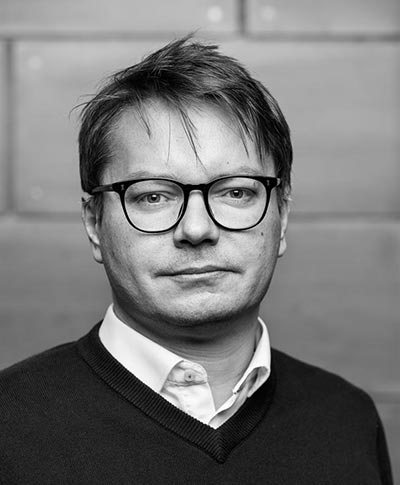
How can augmented reality improve public engagement in cities is the central question behind an article co-written by Taubman College’s Cyrus Peñarroyo with De Peter Yi, B.S. Arch. ’10, assistant professor of architecture at the University of Cincinnati. Published in The Architect’s Newspaper, the pair discuss their collaborative project “Holding Pattern,” a game that uses augmented reality to introduce city residents to the process of redeveloping vacant properties.

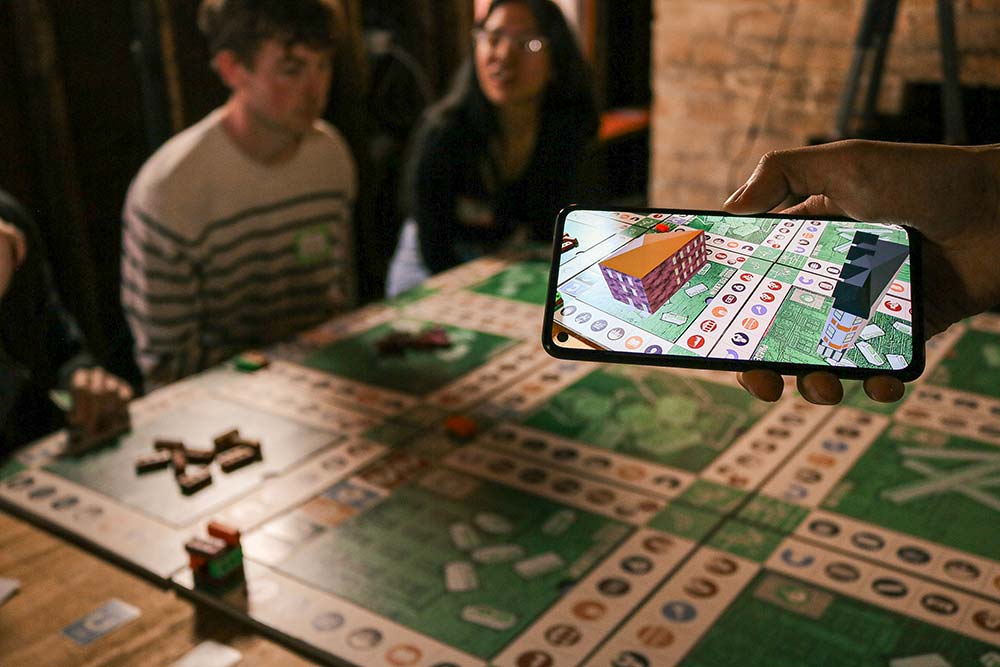
Presented as a series of workshops with city officials and residents in Cincinnati, players role-play as city agencies, community development corporations, developers, businesses, and other groups that work through the process of redeveloping vacant property, including updating zoning and acquiring finances.
The game board is composed of numerous tiles that represent different vacant buildings in Cincinnati, and it also features a digital component. Using resources from the TVLab Fund for Experimental Inquiry, Peñarroyo and his assistant Xuanshu Lin, M.U.R.P. ’25, developed augmented reality models for each tile that change throughout the game. These models, which can be displayed on a mobile device or large screen, allow players to see how their actions change the buildings over time.
According to the article, a key issue with public engagement is that successful reuse programs operate behind the scenes. An example of this is the Historic Structure Stabilization Program operated by the Port of Greater Cincinnati Development Authority, which has directed funding to save and redevelop over 50 structures for reuse. However, the processes affecting the vacant buildings are often hidden and residents aren’t aware of the projects.
Read the full article at the Architect’s Newspaper’s website.