Manful shares new insights on school architecture and the ‘soft power’ of Western education in Ghana
Kuukuwa Manful, Ph.D., assistant professor of architecture at Taubman College, puts forward a new way of thinking about the concept of “soft power” in world politics and international relations in a new article published in Third World Quarterly.
In “Building Blocks of Soft Power: A Sociopolitical History of Western Schools in Ghana,” Manful argues that the “soft” power of Western education in Ghana is undergirded by historical hard power, exercised through and reinforced by the architecture of schools. In so doing, she tackles key questions, such as why Western education is thought of as part of soft power in Africa and how Africans transitioned from being forced students in European institutions, housed within forts and castles of those who traded enslaved people, to seeking Western-style education.
The article is part of a larger book project, The Architecture of Education in Ghana, which uses a multidisciplinary approach straddling politics, architecture, and history to examine the sociopolitical causes and consequences of secondary school buildings in Ghana.
Read the article at Third World Quarterly.
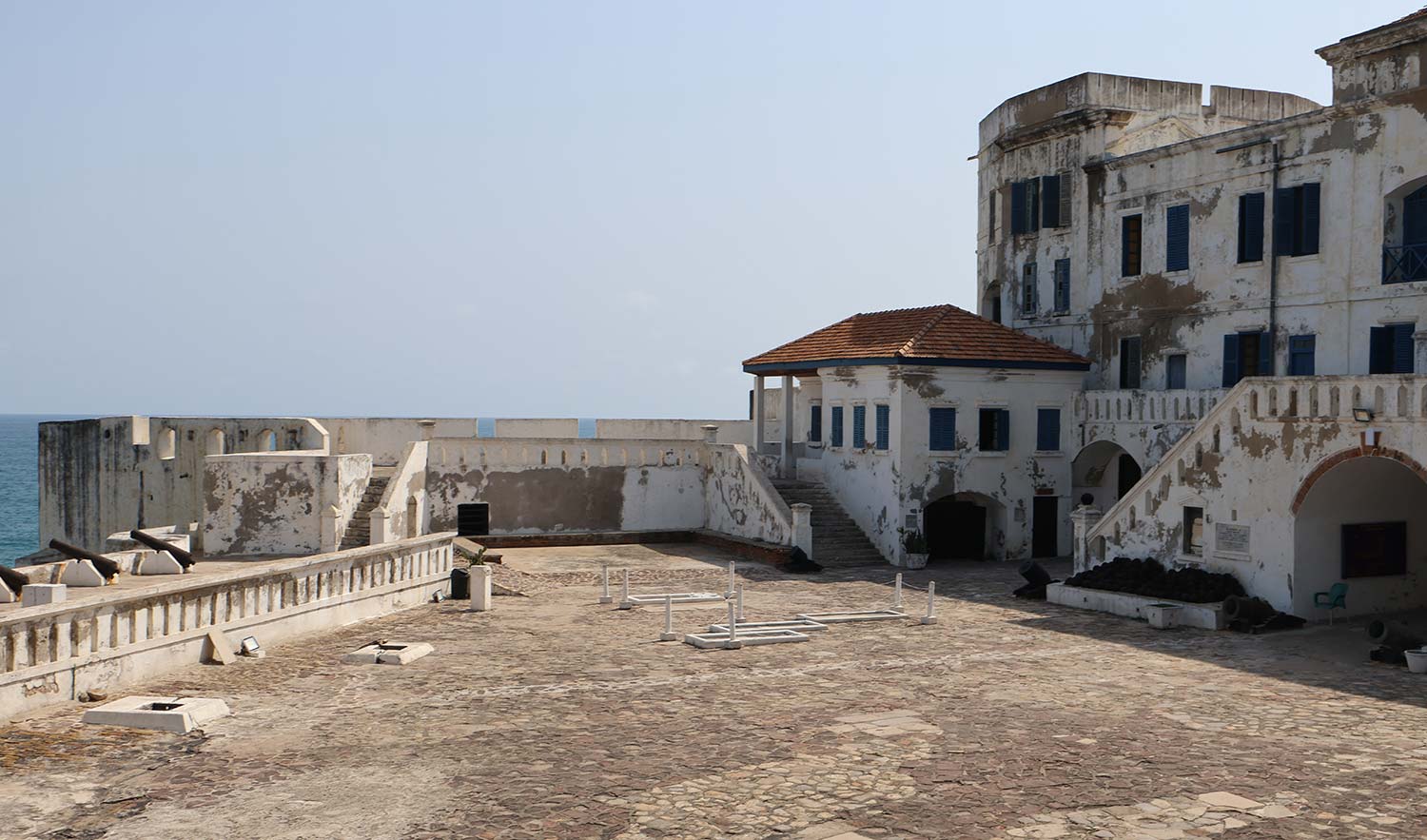
Main Image: Cape Coast Castle, present-day Ghana (completed in the 18th Century). The castle included classrooms overlooking dungeons where enslaved people were held captive.