Boyer tapped as first faculty director of new UMCI in Detroit
Taubman College’s Bryan Boyer has been selected as the first faculty director of the new University of Michigan Center for Innovation. Set to launch in downtown Detroit in fall 2027, the UMCI will be a world-class research, education, and entrepreneurship center designed to advance innovation and develop the necessary talent to grow Michigan’s economy.
“What makes this opportunity compelling to me is Michigan’s particular mix of strengths, such as hard tech, manufacturing, and operations. But Michigan is also a place of deep community strength, grassroots organizing, and cultural brilliance,” Boyer said. “Detroit offers a rare opportunity to integrate technological innovation and social innovation into a shared project. In light of AI’s shockwaves through tech and, increasingly, the wider world, this combination is critical.”
Boyer is an associate professor of practice in architecture and cofounder of the architecture and strategic design studio Dash Marshall. He first joined Taubman College in 2019 as the Eliel Saarinen Visiting Assistant Professor of Practice. Since 2020, he has served as faculty director of the Bachelor of Science in Urban Technology, a first-of-its-kind program combining technology, design, and urbanism, which Boyer helped develop with input from Taubman faculty, alumni, and industry experts. Since launching in 2021, the program has graduated its first cohort and grown to 180 students. This new role at UMCI builds on Boyer’s earlier work at the Finnish Innovation Fund, where he helped launch Helsinki Design Lab, a team embedded in government to develop new, agile approaches to problem-solving.
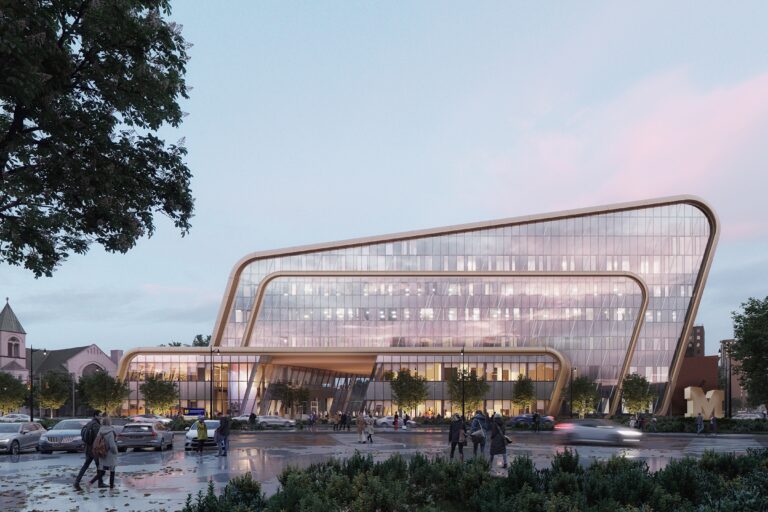
Housed in a brand new, 200,000-square-foot facility, UMCI will include classrooms, research labs, design studios, and public spaces. As faculty director, Boyer will lead UMCI’s multi-disciplinary academic offerings and research, beginning with a set of graduate degrees now in development and including workforce development programming aligned with the jobs of the future in fields like sustainability, technology, and entrepreneurship.
Among the first offerings will be Taubman College’s newly announced Master of Urban Technology. Built on the success of the bachelor’s program, the one-year degree will equip students with the systems thinking and business acumen needed to rethink the work of the built environment in a way that stretches beyond current silos of planning, design, architecture, and real estate.
“We have an obligation and an opportunity to rethink not only curriculum but the institutional forms that support it,” Boyer said. “UMCI can become a platform for testing new models of education that are embedded in place, shaped with partners, and responsive to the transformations AI is accelerating.”