Detroit resilience plan, Ann Arbor rain garden research earn M.U.R.P. students planning honors
Two projects by Master of Urban and Regional Planning dual-degree students aimed at revitalizing Detroit’s East Village neighborhood and using rain gardens to manage stormwater in Ann Arbor have been recognized by the Michigan Association of Planning. Geoffrey Batterbee, M.U.R.P. ’26/M.S. Environment and Sustainability ’26, was part of a team of students from the School for Environment and Sustainability that received an Outstanding Graduate Student Award, and Renee Magyar, M.U.R.P. ’26/M.S. Environment and Sustainability ’26, received an Honorable Mention for Graduate Student Planning Project. Details on each project follow.
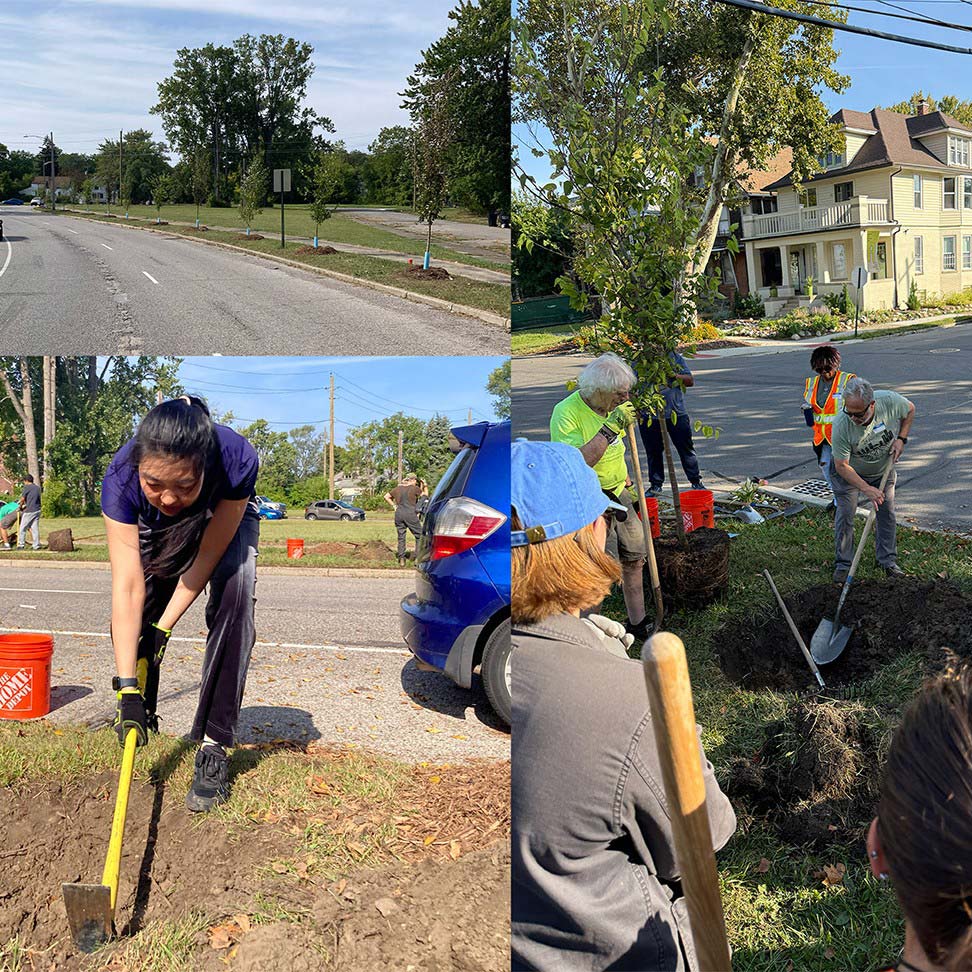
East Village Catalyst Plan: Building Community-Engaged Resilience in Detroit
The East Village is a historically underserved neighborhood in eastern Detroit that has experienced severe disinvestment and vacancies in recent decades. The East Village Catalyst Plan is a collaboration between students from the University of Michigan and the nonprofit organization AboutFaceDetroit, which focuses on revitalization efforts in the East Village. This project was initiated to develop a framework for landscape improvements that enhance the neighborhood’s social character and ecological resilience and included site-level designs, a landscape design toolkit, and the catalyst plan itself.
Jurors said, “We liked that the toolkit breaks down park strip widths and appropriate plant materials — something we see missing from a lot of landscape guides.”
Students: Geoffrey Batterbee, Devin Derr, Anna Peppet, Mujie Sui, and Minxuan Zhang
Advisors: Lisa DuRussel and Isabella Shehab
Read more about the project on the U-M Library website
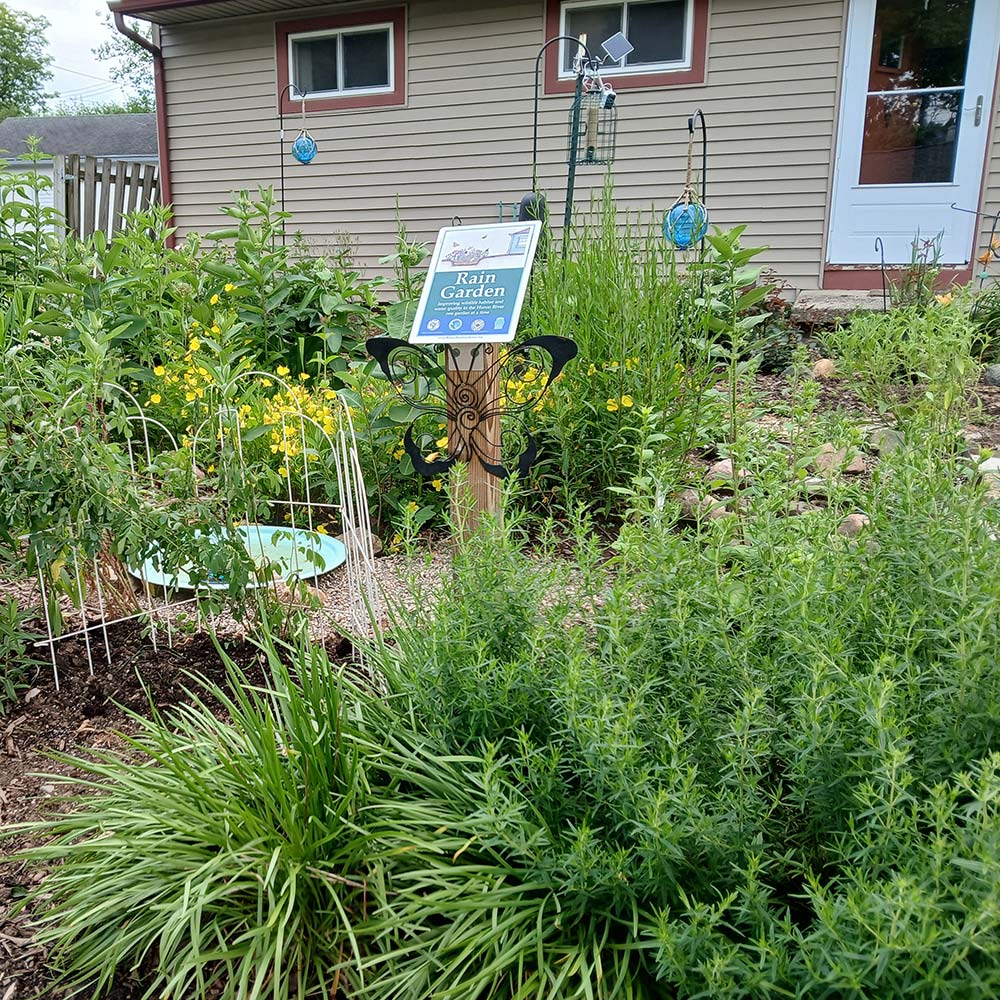
Residential Rainscaping: Analysis of Residents’ Participation in Rain Garden Programs and Stormwater Management in the City of Ann Arbor, Michigan
This project is the first to formally evaluate the long-term effectiveness of Ann Arbor rain garden programming. The project uses a three-part assessment model that includes analysis of the spatial distribution of rain gardens by sub-watershed; analysis of a previously conducted countywide survey; and interviews with survey respondents.
Jurors said, “We appreciated that the student evaluated an existing program to quantify impacts that to this point were not well understood. We think the assessment methodology is repeatable for other communities with rain garden programs.”
Student: Renee Magyar
Read more about the project on the Taubman College website.