Access by Design
Through Fresh Graphics, Julia McMorrough is helping future architects rethink accessibility and inclusion in the built environment
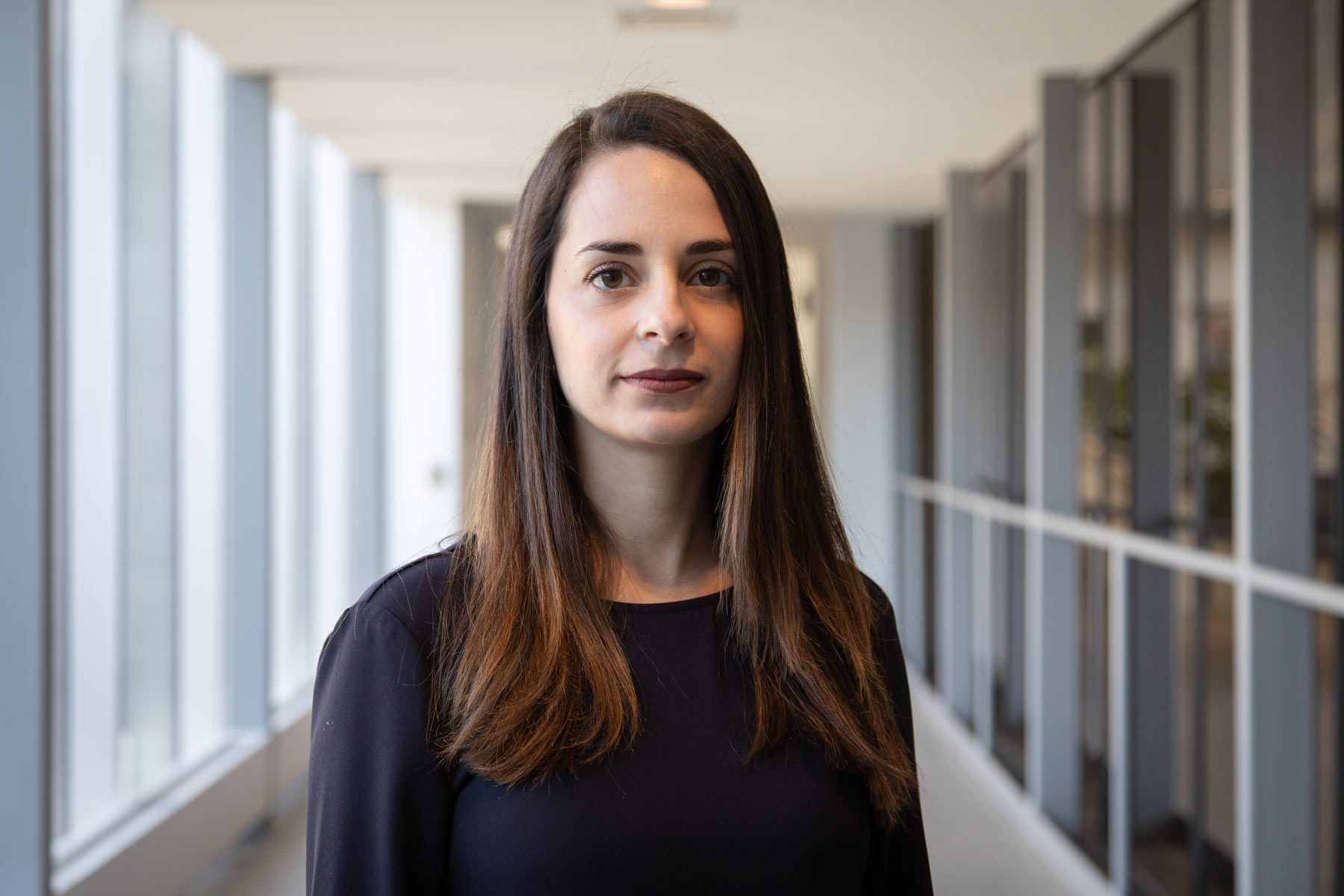
Growing up with a disabled sister with complex access needs, Julia McMorrough learned at an early age about the challenges disabled individuals can face in going about their daily lives. However, because her family simply did what was necessary to help her sister move through the world, she was well into her 15-year career as a practicing architect before she realized the important connection between architecture and access.
“As an architect, I was slow to recognize that the built environment should be doing more to design accessible spaces that are enabling, rather than disabling, for everyone,” says McMorrough, associate professor of architecture at Taubman College and co-founder of studioAPT, an Ann Arbor-based research and design collaborative.
“Looking back at the years I worked at professional architectural firms in the Midwest and on the East Coast, I now realize how often designing for accessibility was treated more as an afterthought than an objective, even though it is required by law,” she remarks. The Americans with Disabilities Act became law in 1990.
In 2025, the U.S. Centers for Disease Control and Prevention reported that more than one in four adults in the United States has some type of disability. For many of these individuals, barriers often amount to just a few inches. Navigating stairs, steps, and steep slopes can be challenging. Doorways are often too narrow for wheelchairs and other mobility devices, while countertops, cabinets, and closet shelves may be too high to reach.
After McMorrough left full-time professional practice to join the faculty at Taubman College in 2011, she made a conscious decision to embrace accessible design thinking and integrate it into her studios, seminars, and courses.
“I realized students had difficulty understanding the concept of designing for accessibility and disability, because, historically, it has not been prioritized as part of a general architectural education,” McMorrough explains. “In my teaching, I am fortunate to have a platform to reach students early in their training and to ingrain this concept into their thinking.”
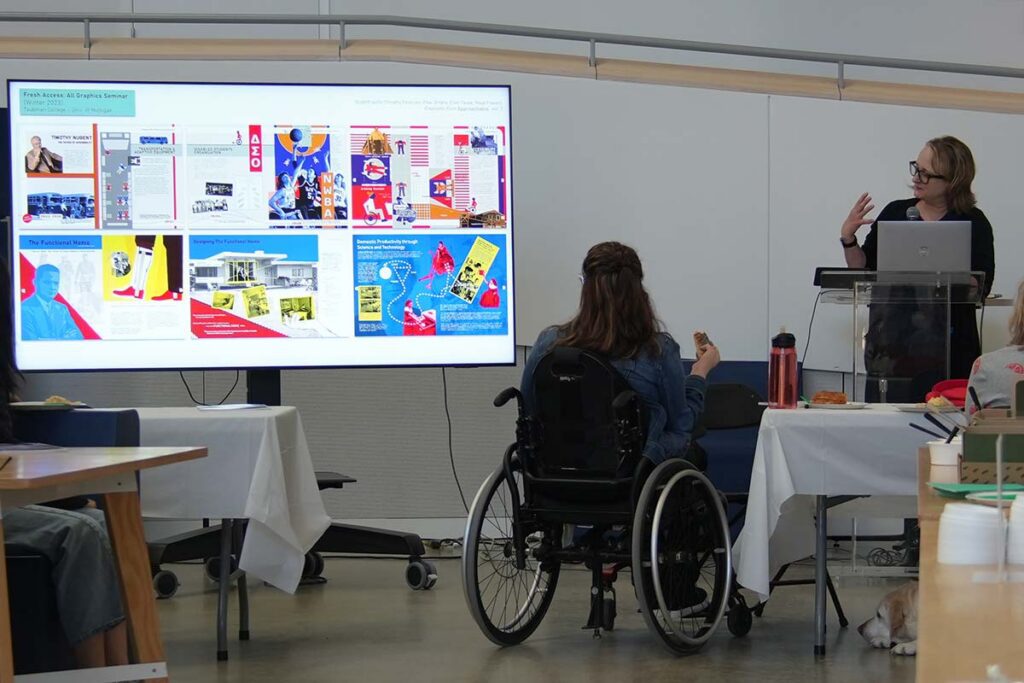
McMorrough’s ARCH500 seminar, Fresh Graphics, breaks the concept of designing for accessibility into bite-sized pieces for students. Launched in 2013, the class prioritizes graphic communication to demystify big concepts. In its current focus on accessible design, it connects students with the disability community and provides the tools and opportunities to disseminate information about accessible design to a broader audience.
“The goal of the class is to help students utilize their visualization skills to communicate ideas that may be difficult for other people to understand,” McMorrough says, noting that professional architects often need similar skills to impart their design ideas and rationale to their clients.
In the seminar, students hone their “inclusive-communication” abilities by creating graphic designs for print and digital media that convey easy-to-understand messaging about different accessibility topics ― such as the need to include the voices of people with disabilities in design culture and how changes to the built environment can foster greater independence and freedom.
In 2025, a U-M Arts Initiative grant enabled McMorrough to compensate disabled individuals from a local nonprofit advocacy group, Disability Network Washtenaw Monroe Livingston, who agreed to collaborate directly with the Fresh Graphics class. During in-person meetings, network members (“knower-users”) talked about their personal stories and insights on living with a disability, the advocacy work they do, and the need for more accessible places and spaces.
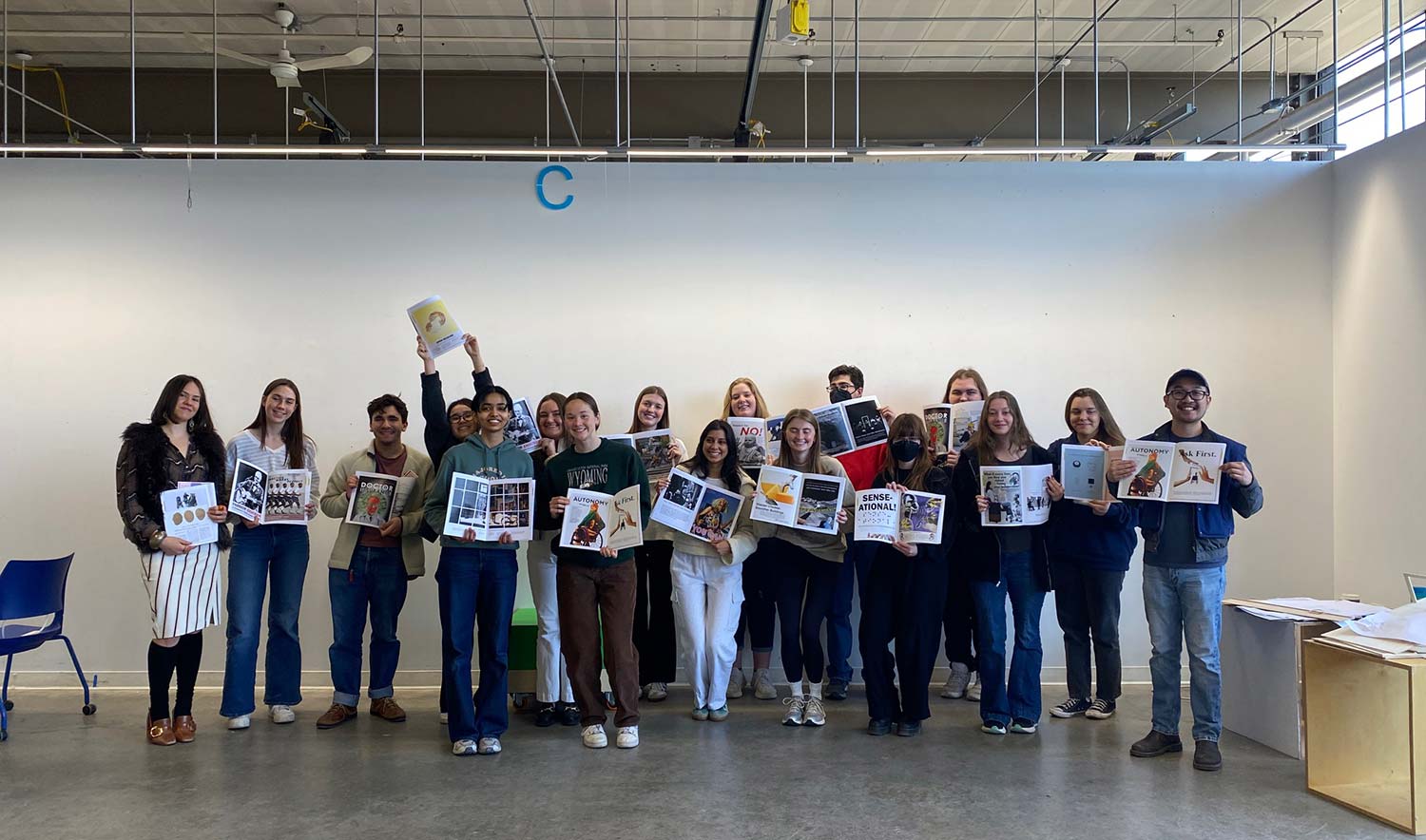
For their class project, students created, produced, and distributed a print magazine, Approachable, Too, which visually retold these personal stories in a compelling, approachable way through graphic illustrations.
Makenna Karst, M.Arch ’25, says her interest in the intersection of disability, architecture, and graphic communication prompted her to take the Fresh Graphics class in the winter 2025 semester.
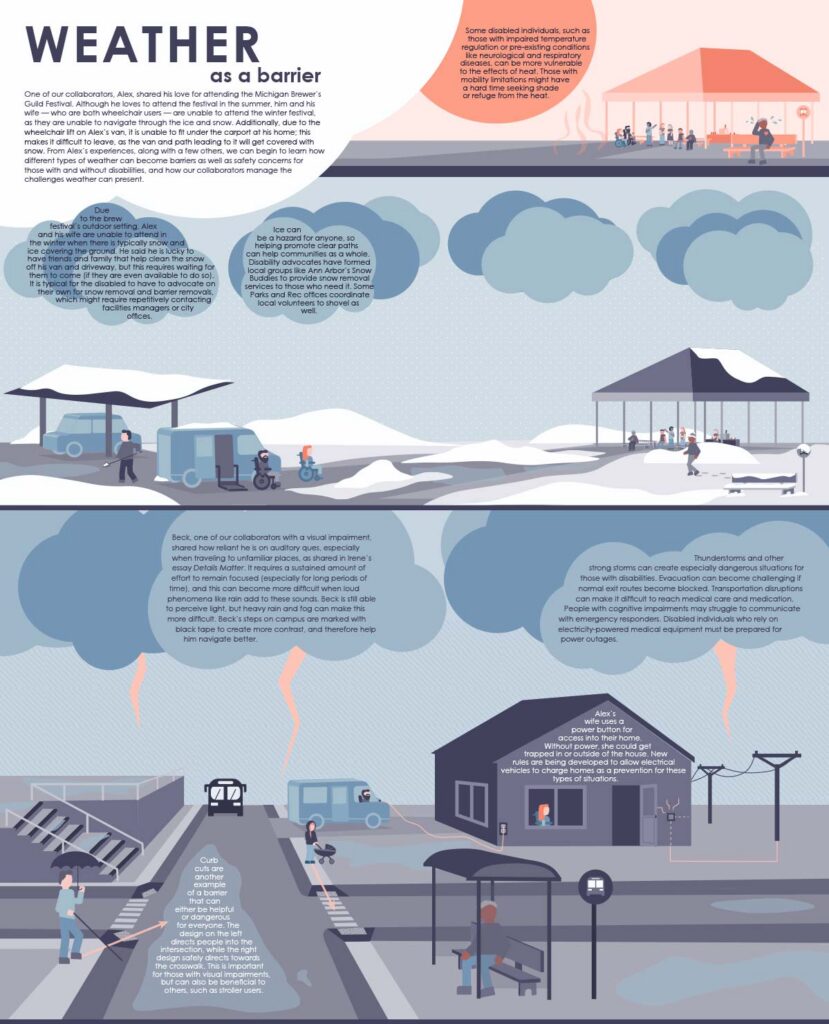
“I was motivated to better understand perspectives beyond my own and share the lived experiences of those who are so often overlooked in the design process,” she explains. “Speaking directly to individuals in the disability community and translating their daily experiences into the Approachable, Too magazine made the work in this class feel personal, and, in turn, deeply meaningful.”
Karst and her classmates learned how choices about color, layout, and text can affect who is able to access and engage with their work. The class also reinforced Karst’s belief in participatory architecture and the importance of designing with people rather than for them.
“Accessible design has become central to my design process rather than an afterthought,” Karst says. “I plan to apply what I’ve learned to continue advocating for more-inclusive solutions throughout my future career.”
During the winter 2026 term, students developed print advertisements, short films, and a standalone exhibit to raise awareness of accessibility issues among their peers and to share ideas for incorporating accessibility into architectural design thinking.
With funding from a U-M ADVANCE SUCCEED grant, McMorrough is also currently writing a comprehensive new book on inclusive design that will serve as a resource for students anywhere at any time.
“This all centers on raising students’ consciousness about disability and accessible design and then empowering them to share what they’ve learned with others,” she says.
— Claudia Capos