When It Rains, It Floods
Taubman College faculty and regional partners advance nature-based solutions to reduce flood risk and bolster biodiversity
Across Southeast Michigan, more frequent and severe rainstorms are overwhelming aging combined sewer systems, while the loss of wetlands and other natural features has reduced the landscape’s ability to absorb floodwaters.
For decades, efforts by local communities to address the growing risks associated with flooding have been hampered by a lack of regional coordination; the legacy of a massive, outdated combined sewer system; and insufficient funding to maintain operations. New solutions — and coordinated action — are needed.
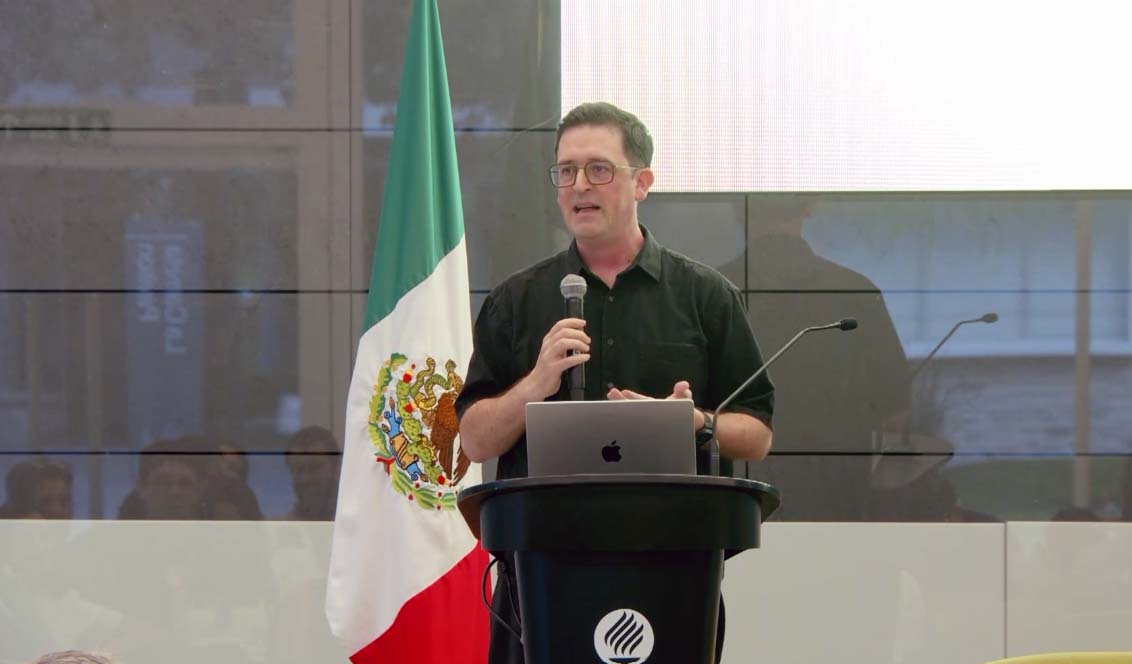
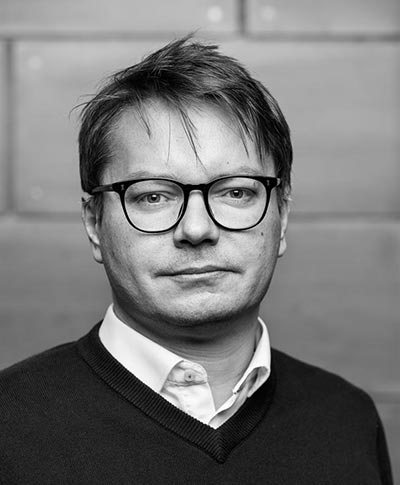
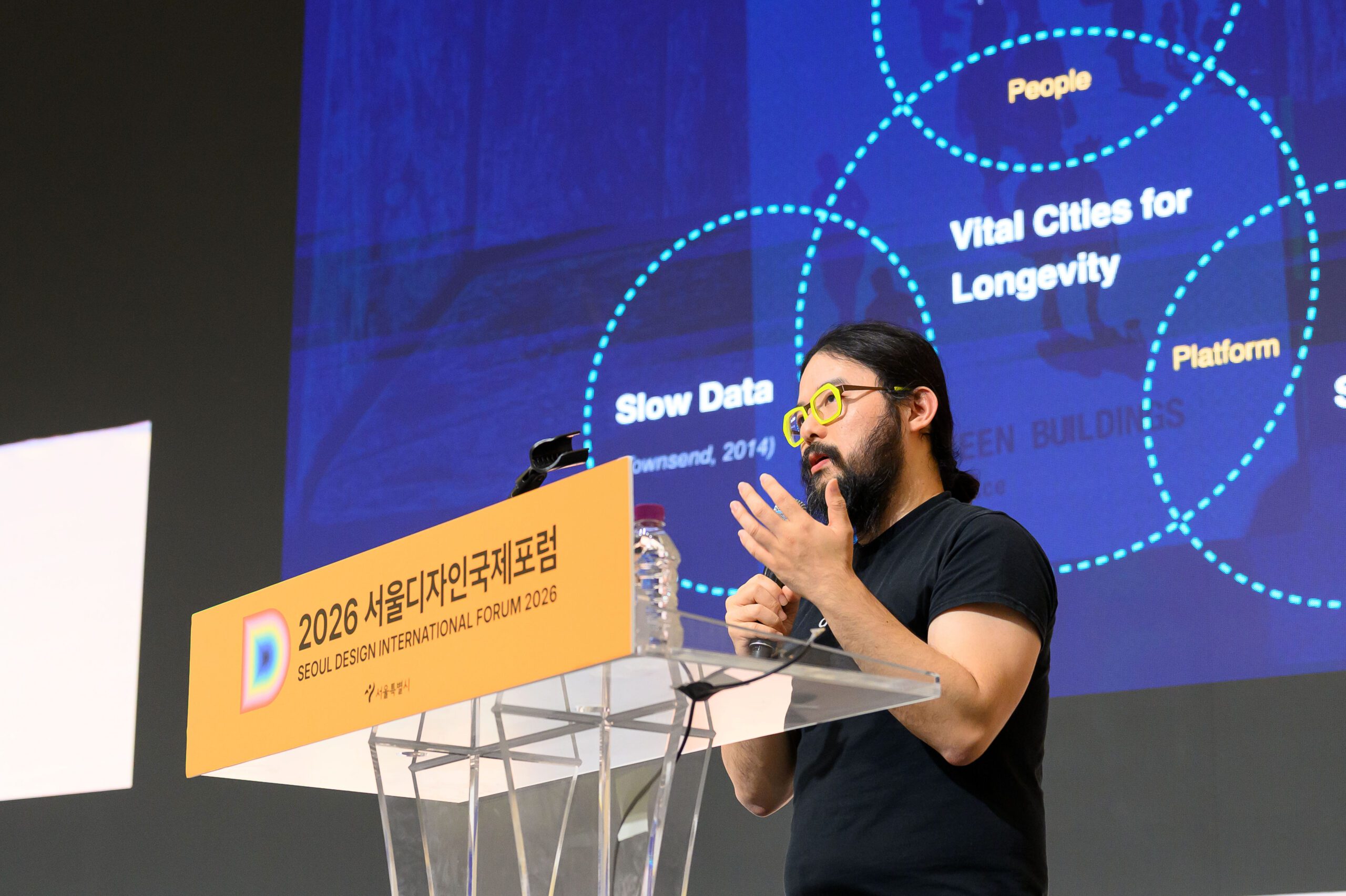
Over the past two years, Taubman College faculty members Kathy Velikov, María Arquero de Alarcón, and Geoffrey Thün have collaborated with public, private, and academic partners to advance large-scale, nature-based solutions and visualize how they could mitigate urban flooding and protect biodiversity in the region.
Nature-based solutions (NbS), such as wetlands, rain gardens, re-naturalized streams, and bioretention ponds, use natural processes and biological systems to help cities manage stormwater, adapt to climate change, and build resilience. These approaches can reduce flood risk, improve water quality, reduce pollution, increase biodiversity, restore ecosystems, and support health and well-being.
“Urban flooding is a complex problem,” says Velikov, FAIA, professor of architecture, and co-principal investigator on the project. “Devising novel approaches to large-scale, nature-based solutions in our region requires transdisciplinary collaborations to integrate innovative governance, sustainable finance tools, and public awareness of the related socioecological and economic benefits that attend these solutions.”

Supported by the National Fish and Wildlife Foundation’s (NFWF) National Coastal Resilience Fund, the project included faculty from U-M, Michigan State University, and Wayne State University’s Healthy Urban Waters Program, as well as environmental engineers from LimnoTech Inc. Engaging with local and regional government, environmental nonprofits, and community groups was also essential to the project.
Making the Data Accessible
“One of the benefits that architects, urban designers, and planners bring to teams is the ability to integrate knowledge across domains,” explains Velikov, who is also associate dean for research and creative practice at Taubman College. “We can bring together a wide range of design methods and visualization techniques to translate complex scientific datasets and make them accessible to broad audiences.”
Arquero de Alarcón explains that the project advances three interrelated components to steward regional climate resilience: 1) infrastructure design that integrates natural processes to aid the combined sewer system’s performance; 2) multi-jurisdictional strategies for siting, financing, and management of large-scale NbS; and 3) biodiversity conservation to rebuild ecosystem health.
Paving the Way
The study focuses on three watersheds ― the Clinton, Detroit, and Rouge rivers ― within the Great Lakes Water Authority’s service area and across Macomb, Wayne, and Oakland counties. The Taubman College research team co-created tools, frameworks, and workflow processes that integrated the broader team’s range of expertise, spanning engineering, finance, and ecosystem health.
Project contributions include:
- Organizing and facilitating partner advisory workshops that engaged stakeholders from 36 organizations across Southeast Michigan. Participants included watershed and municipal leaders, community organizations, environmental managers, drain commissioners, and fish and wildlife conservation groups.
- Creating an online geographic information system (GIS) interface and thematic maps that display multiple data layers needed to assess the siting of NbS to mitigate stormwater flooding and biodiversity loss.
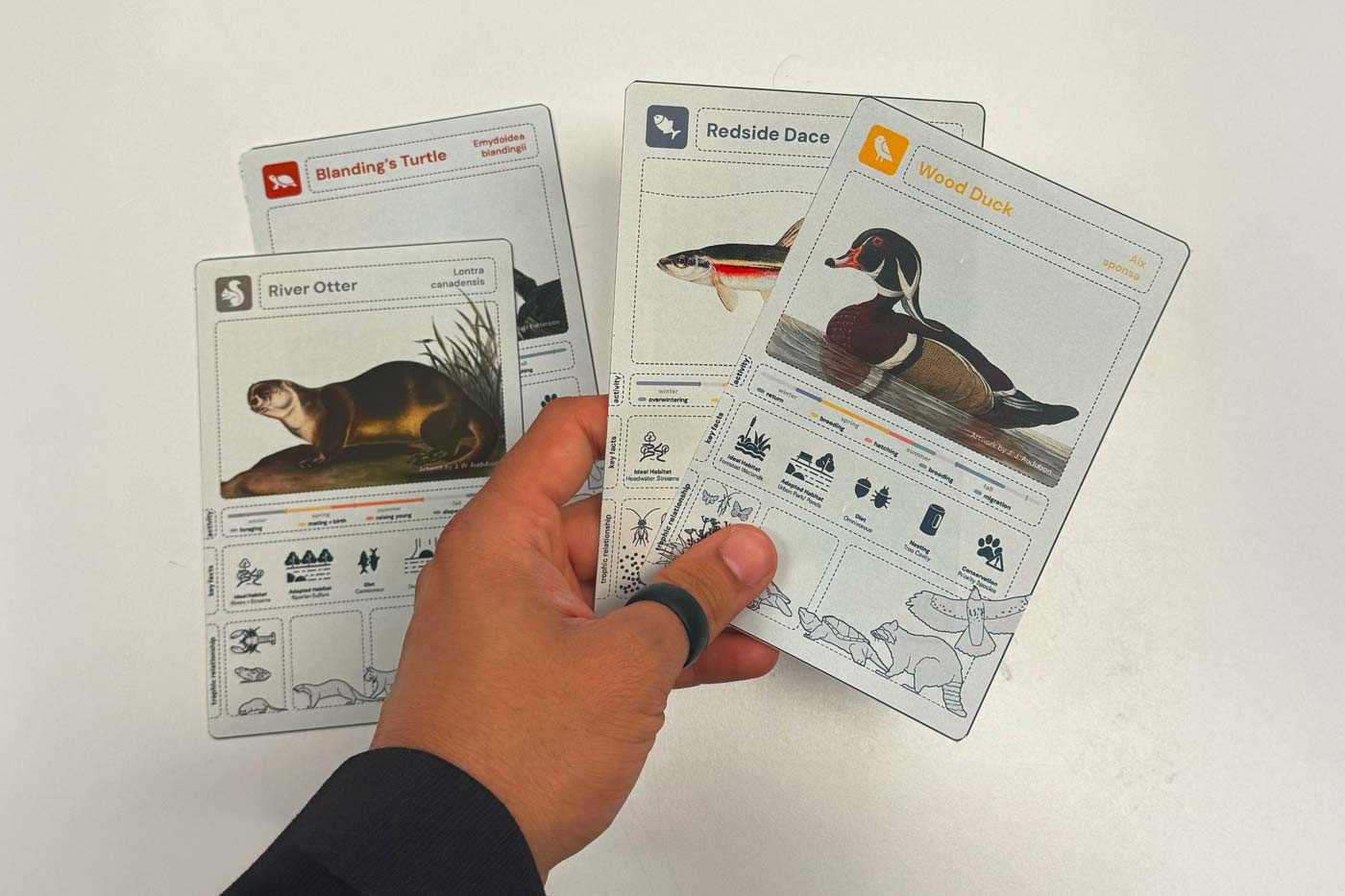
- Developing project materials to support communication with stakeholders, including card sets featuring relevant precedents across the U.S., wildlife habitats, and NbS typologies. These card sets help community partners and constituents visualize which large-scale, nature-based solutions would be most appropriate, manageable, and beneficial, and consider next steps for implementation.
- Exploring new finance and governance models to support future NbS planning and development in communities affected by stormwater flooding across the region.
Lessons Learned from Partner Engagement
Taubman College research associate Ehsan Alam, M.U.D. ’24, says the project has been a valuable platform for applying knowledge and skills he began to develop in graduate school. He also saw firsthand the complexities of applying research methods and theoretical frameworks in real-world projects.
“As urban designers, we are comfortable looking at a GIS map with 50 interactive layers,” Alam says. “However, community partners told us the maps were too complex to understand, so we had to adjust them to make them legible for different stakeholders.”
Alam says this “reality check” is something he intends to take with him as he advances his design research career.

Continuing Efforts to Drive Change
The commitment to co-design solutions for climate resilience will continue with new funding from a grant secured through Research Universities for Michigan (RU4M). As part of the Livable Futures – Water Collaboration initiative, the RU4M grant, “Rewilding Urban Waters: Scaling-up Nature-based Solutions through Sustainable Operations and Management Regimes,” will extend this research to create enduring societal benefits.
The team from U-M, MSU, and WSU is partnering with regional organizations and governmental agencies to explore practical pathways for improving the operations and maintenance of nature-based solutions and adapting those models for use in other communities.
“This type of research project — engaging pan-sector partnerships with a range of external entities — is precisely the model that is likely to create strong connections between our research enterprise and impact that benefits the communities we serve,” says Thün, who also serves as Associate Vice President for Research: Social Sciences, Humanities and the Arts at U-M.
“Water is a fascinating matter that reveals much about our cultural and environmental values and our societal priorities,” says Arquero de Alarcón, who will serve as principal investigator on the RU4M project. “These projects are unique opportunities for academia to join ongoing community efforts to steward this incredible resource right here, in the heart of the Great Lakes.”
— Claudia Capos
Main Image: Fish and Wildlife Habitat Planning Cards foreground ecological considerations for priority species in NbS design.