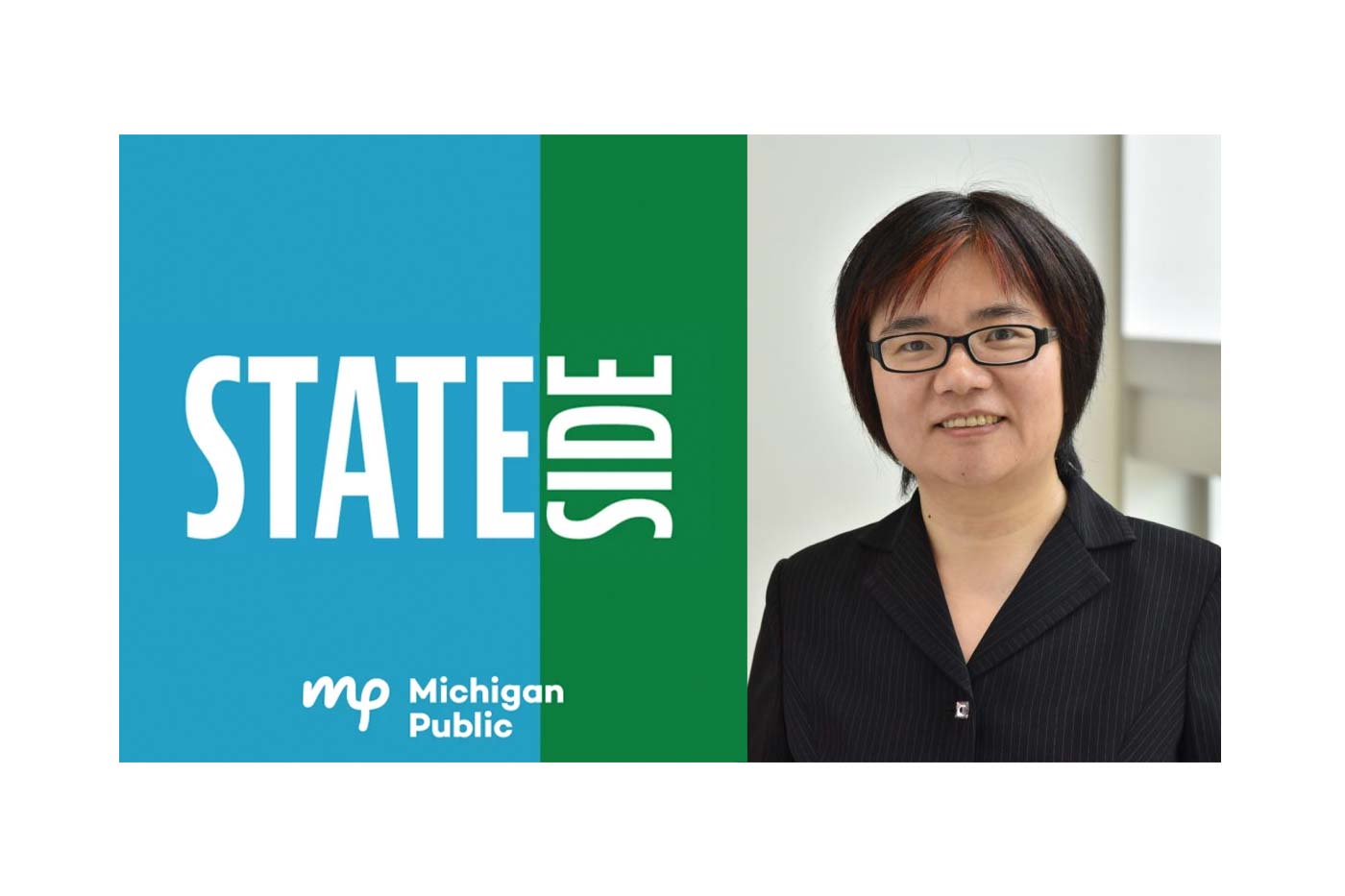
IN THE NEWS: Deng discusses ROAD to Housing Act on Michigan Public’s ‘Stateside’
The recently passed bipartisan ROAD to Housing Act offers a helpful set of incentives to spur more housing production, but it will require cooperation from local governments nationwide to bring down costs. That was the message Lan Deng, chair and professor of urban and regional planning at Taubman College, shared on the Sept. 2 episode of Michigan Public’s “Stateside with April Baer.” The bill, which became law in July, aims to make home construction, purchasing, and renting more affordable.
In addition to incentives for local governments to enact zoning and building code reforms, the bill limits how many single-family homes investors can buy and removes the “permanent chassis” requirement for manufactured homes to lower production costs.
While the provision limiting corporate investment in single-family homes has received much attention, Deng stressed that corporate purchases are only a small part of the housing affordability problem. Furthermore, she said investor purchases have affected the housing market more in some areas than others, particularly in the Sunbelt.
“In Michigan, I’m sure there have been investor purchases but probably not to the degree that people saw in Georgia, for example,” Deng said.
Deng also discussed the bill’s federal incentives for local governments to improve their building and zoning codes. The bill includes an innovation grant meant to help spur reform at the local level and also streamline requirements to receive federal funding for affordable housing.
Overall, Deng stressed that the bill is more a collection of reforms and incentives for local government than a direct funding package, and that its effect on reducing housing costs will largely depend on how local governments respond.
“This bill provides incentives to encourage local planning, zoning reform (and) building code reform,” she said. “It has an innovation grant that would provide incentives for local governments to undertake those reforms but, of course, I think the impacts of this act will very much depend on how local governments respond to them. Will they be able to take on those incentives?”
The full episode is available at MichiganPublic.org, with Deng’s interview beginning at the 21:30 mark.
— Carter Howe, M.U.R.P. ’28